Best Dive Sites in Santorini & the Cyclades: A Diver's Guide
Volcanic caldera walls, white lava labyrinths, monk seal caverns, and the wrecks of The Big Blue – eight dives across four Cycladic islands
DiveLine Team
2026-07-06
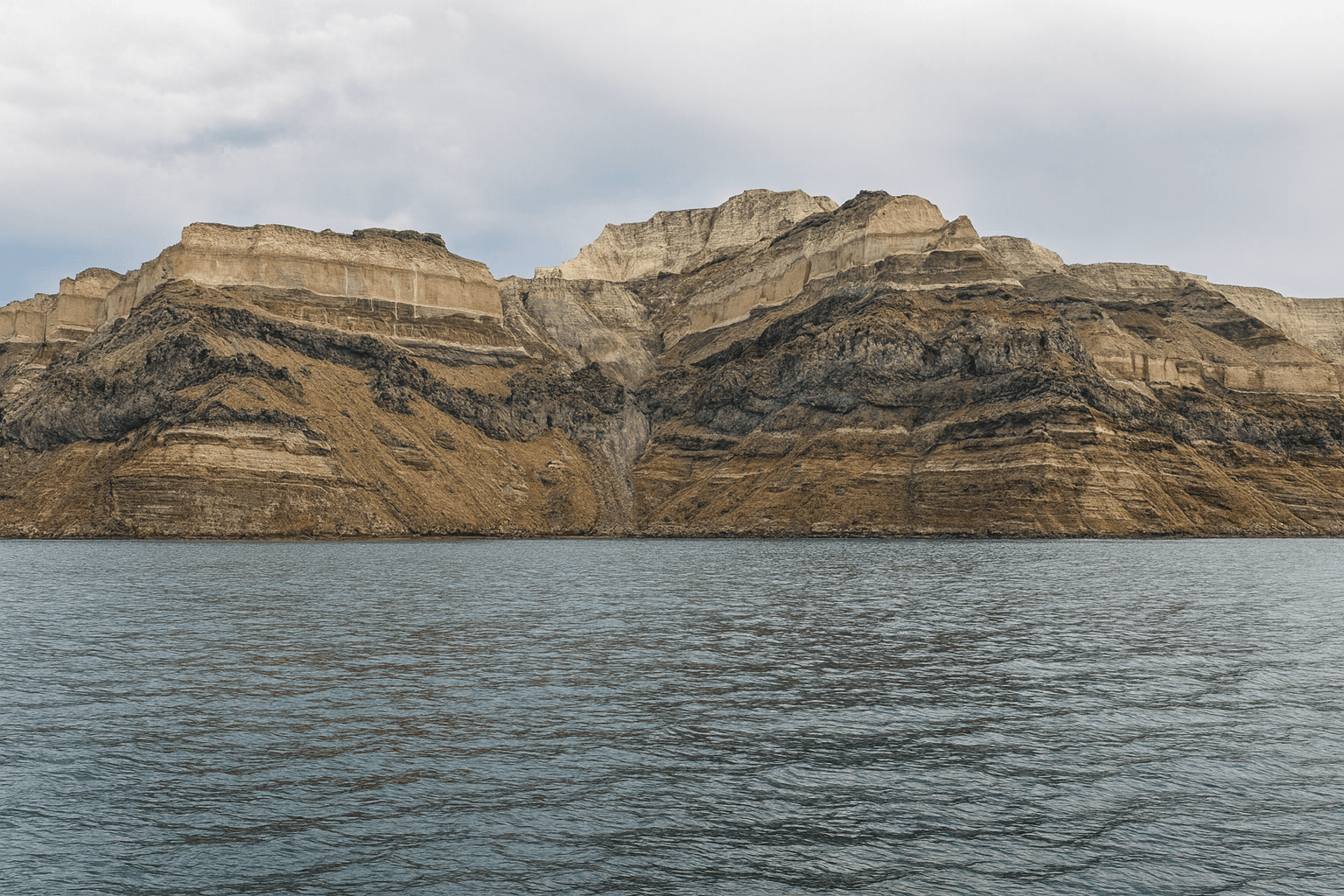
The Best Dive Sites in Santorini & the Cyclades
Strip away the sunset crowds and the beach clubs, and the Cyclades are one of the most geologically interesting places you can put a regulator in your mouth. Santorini and Milos sit directly on the South Aegean volcanic arc – one is a flooded caldera you dive inside, the other an island of pale lava sculpted into arches and sea caves. Mykonos and Amorgos are built of older, harder rock, which is exactly what you want under upright wrecks and sheer walls. Add water that routinely delivers 20-30 m of visibility, a microtidal sea with essentially no true swell, and a ferry network stitching the islands together, and you have the raw material for a serious dive itinerary rather than a beach holiday with a dive bolted on. This guide covers eight dives across four islands – Santorini, Milos, Mykonos, and Amorgos – from a steamship parked on an active volcano to the island where Luc Besson shot The Big Blue.
Best time to dive: The season runs May through October. Water temperature climbs from the high teens in early season to a peak of 24-25°C in August, and bottoms out around 17°C in winter. The wild card is the meltemi, the dry northerly wind that blows hardest in July and August and can hold at Force 6-8 for days – operators respond by shifting to each island's lee side, but exposed sites and longer crossings do get cancelled. June and September offer the best trade-off between warm water, strong visibility, and reliable boat schedules.
Pro tip: Wind, not swell, is what makes or breaks a Cyclades dive day. Check real-time wind and conditions forecasts on DiveLine's Santorini, Milos, Mykonos, and Amorgos pages before locking in your boat days.
1. Adiavati Reef
- Difficulty: Intermediate
- Type: Boat dive
- Depth: 18-30 m (60-100 ft)
- Visibility: Typically 15-24 m (50-80 ft)
Every caldera dive on Santorini starts from the same unusual premise: you are diving inside a volcano. The Minoan eruption of around 1600 BC blew the centre out of the island and let the Aegean in, leaving a flooded basin ringed by 300 m cliffs. Adiavati Reef is the signature dive of that caldera and the flagship of the standard boat trip out of Caldera Beach, below the Akrotiri cliffs. A wall of dark volcanic rock drops from the shallows to about 30 m, broken mid-face by a natural ledge that divers work along like a path before the rock keeps falling away into the caldera basin below.
For a reef inside a volcanic crater, the life is remarkably dense – Adiavati is consistently rated the most fish-rich reef on the island. Sponges and Mediterranean corals crust the black rock, clouds of anthias hover off the wall, and wrasse, parrotfish, grouper and red snapper work the ledges, with barracuda passing through on occasion. The Kameni islets screen the site from the worst of the meltemi funnelling down the caldera, so it runs reliably through the season. A shallow 12 m version suits newer divers, but the full wall to 30 m is where the site earns its reputation.
2. Taxiarchis Wreck
- Difficulty: Intermediate
- Type: Boat dive
- Depth: 12-18 m (40-60 ft)
- Visibility: Typically 20-30 m (65-100 ft)
The Taxiarchis Wreck is the dive you describe to non-divers when they ask why you came to Santorini: a roughly 27-30 m steel passenger ship lying on the flank of Nea Kameni, the active volcanic cone at the centre of the caldera. She went down in 1981 in Taxiarchis Bay – not to weather or war, but to a crew member's pumping error – and settled largely intact on the lava seabed beside the bay's cliff-set chapel. Sitting in 12-18 m of flat, current-free caldera water a short crossing from Fira, it is the most photographed wreck on the island and an easy, high-yield dive on any caldera itinerary.
Manage expectations on fish life: the young lava seabed here is comparatively barren, and the wreck is the neighbourhood's only real structure. That concentrates what life there is – look for seahorses, octopus and crabs on the hull, with sponges and the odd moray on the adjacent volcanic formations. The draw is the setting: an intact ship on an active volcano, with hot-spring-warmed water nearby. Pair it with the Palea Kameni Steamboat Wreck, a 1920s coal-fired steamer minutes from the famous hot springs, and you have covered both of the caldera's classic wrecks in a single day.
3. Kleftiko
- Difficulty: Intermediate
- Type: Boat dive
- Depth: 12-21 m (40-70 ft)
- Visibility: Typically 24-40 m (80-130 ft)
Kleftiko is the signature dive of Milos and the most sculptural seascape in the Cyclades: a labyrinth of brilliant-white volcanic arches, tunnels and sea caves rising straight out of turquoise water on the island's roadless south-west tip. The name recalls the pirates who once used the maze as an anchorage; today it takes a 45-60 minute boat crossing from Adamas, and every Milos operator runs it as a headline trip. The dive threads through caverns and swim-throughs mostly between 12 and 21 m, with shafts of sunlight cutting through openings in the rock overhead.
Visibility is regularly 25 m and can stretch toward 40 m on the right day, which matters, because this is a dive you do with your eyes up as much as down. Octopus, morays, grouper and bream shelter in the rock, and turtles occasionally transit the bays, but the white stone and the light are the show. The wind logic works in your favour here: the island shadows Kleftiko from the summer meltemi, so it is often flat when the north coast is blown out. The reverse also applies – southerly wind pushes surge through the shallow caverns and can shut the site down. Most west-coast itineraries pair it with Sykia Cave, a half-collapsed sea cave where sunlight pours through the fallen roof and lights the chamber emerald – two of the Mediterranean's best light-show dives in a single boat day.
4. Africa Wreck (Sarakiniko)
- Difficulty: Beginner
- Type: Shore dive (rocky entry)
- Depth: 6-11 m (20-35 ft)
- Visibility: Typically 15-24 m (50-80 ft)
The Africa Wreck is the only site in this guide you can walk into. The roughly 90 m tanker – launched in 1966 as the Esso Purfleet – was driven aground off Sarakiniko on Milos in a Force 11 storm in December 2003, the crew swimming ashore without a single casualty. Two decades of surge have since broken the hull apart, scattering plating, ribs and machinery across 6-11 m of water a few metres off the island's famous lunar-white shoreline. Entry is over the smooth volcanic rock shelf east of Sarakiniko beach, followed by a short surface swim to the wreckage.
As a dive it is simple and shallow – a beginner-friendly wander over wreckage that has matured into an artificial reef, with schooling bream and damselfish over the plates, octopus wedged into the steel, and morays and scorpionfish in the gaps. The catch is exposure: the wreck faces due north into the full fetch of the meltemi, so this is strictly a calm-window dive. In any northerly chop the rock shelf turns slippery and surge-prone, and operators simply skip it. When it is flat, though, it is one of the most photogenic shallow wrecks in Greece, and equally worthwhile as a snorkel between boat days.
5. Anna II Wreck
- Difficulty: Advanced
- Type: Boat dive
- Depth: 24-37 m (80-120 ft)
- Visibility: Typically 18-30 m (60-100 ft)
The Anna II is the single most-booked dive on Mykonos, and deservedly so: a 62 m Dutch-built cargo ship, laid down in 1966 as the Knud Sif, that sank off Lia Beach on 20 July 1995 while carrying cement. She sits bolt upright and intact on the sand at around 36 m, with the deck running at 18-21 m – a profile that works for everyone from fresh Advanced students to experienced wreck divers. The commute is absurdly short: about three minutes by RIB from Lia Beach on the island's south-east coast.
Three decades underwater have turned her into a proper artificial reef. Large, colourful sponges crust the hull, damselfish and bream school over the deck, and grouper, morays, scorpionfish and resident octopus occupy the structure; suitably trained wreck divers can make limited penetrations into part of the hull. Just as important for trip planning: the site lies in the lee of the island's bulk, shadowed from the meltemi, which makes it the most reliably divable dive on Mykonos – it runs almost daily through the season, and only a strong southerly closes it. Divers with deep or technical training should also ask about the Peloponnisos Wreck, an 1860s Glasgow-built steamer that sank in 1926 off the exposed north-east coast and now lies in two sections between 15 m and roughly 55 m – Anna II's demanding older sibling, dived only when the meltemi allows.
6. Dragonisi (Tragonisi) Caverns
- Difficulty: Intermediate
- Type: Boat dive
- Depth: 12-30 m (40-100 ft)
- Visibility: Typically 20-30 m (65-100 ft)
Dragonisi is an uninhabited islet a few miles off Kalafatis on Mykonos's east coast, its sheer cliffs riddled with dozens of caverns, tunnels and chambers – the best cavern diving in the central Aegean. Many chambers are open-water bright from as shallow as 3 m, with sunbeams cutting through dense curtains of glassfish, and the walls carry the distinctive yellow sea anemones found almost nowhere else. The islet is a protected Natura 2000 reserve and one of the Aegean's strongholds for the rare Mediterranean monk seal (Monachus monachus); encounters are never guaranteed, but this is one of the few places in Europe where they genuinely happen.
Most of the caverns suit any comfortable diver with decent buoyancy control and a torch; the deeper Seal Cave is offered on request to experienced divers only. Timing is the key variable. The caverns line the islet's eastern, open-Aegean flank, and the meltemi wraps around the northern tip to drive steep chop – and amplified surge inside the chambers – onto exactly that side. Operators schedule Dragonisi for calm mornings before the wind builds, and it is worth structuring your Mykonos days around that slot, because on a still day this is the best dive the island has.
7. Nikouria Cavern (Agios Pavlos)
- Difficulty: Beginner
- Type: Boat dive
- Depth: 12-21 m (40-70 ft)
- Visibility: Typically 24-30 m (80-100 ft)
Amorgos is the Cyclades' quiet heavyweight – the island where Luc Besson filmed The Big Blue, with some of the clearest water in Greece – and Nikouria Cavern, also called Agios Pavlos or simply the Big Cave, is its most-dived site. A short boat hop from Agios Pavlos beach crosses the channel to the islet of Nikouria, where an open cavern is cut into the wall: a wide lower entrance at around 18 m and a second opening near 8-12 m frame the blue of the open sea like a picture window.
The cavern walls are the attraction, plastered in purple, red and yellow encrusting sponges and false corals, with large spiral tube worms, nudibranchs, lobsters, morays and scorpionfish for the macro crowd, and sea bass, bream and the occasional passing barracuda off the entrance. Fan mussels and pipefish live in the surrounding seagrass. The open layout means no true overhead commitment, and the forgiving profile suits everyone from newly certified divers to photographers burning a whole tank in one spot. If you dive a single site on Amorgos, make it this one – then come back the next day for the wall around the corner.
8. Deep Blue Wall
- Difficulty: Advanced
- Type: Boat dive
- Depth: 18-40 m (60-130 ft)
- Visibility: Typically 24-40 m (80-130 ft)
That wall is the Deep Blue Wall, off the western tip of Nikouria, and it is Amorgos's serious dive: a vertical face dropping from about 18 m past 40 m and onward into genuine technical territory. Recreational profiles cap around 40 m, and hanging on the face over that void is about as close as diving gets to skydiving. A large, high-ceilinged cavern opens in the wall at roughly 25 m, and an ancient amphora rests on the edge of the drop – said to be a relic of a ship lost at the Battle of Amorgos in 322 BC.
Gorgonians and sponges cover the drop-off, grouper and morays hold the rock, and the blue delivers: barracuda and tuna patrol off the wall, dolphins turn up occasionally, and there are rare monk seal sightings. The site faces the open Naxos-Amorgos channel, so the meltemi wrapping the western point is what calls it off. If wrecks are more your thing, the same operators run the Olympia Wreck at Liveros Bay – the rusting freighter Jean Reno freedives through in The Big Blue – and, for advanced divers, the enormous Manina 3 Wreck an hour's boat ride east at Kinaros.
Planning Your Cyclades Dive Trip
Santorini and Mykonos both have international airports with seasonal direct flights from across Europe; Milos has short domestic hops from Athens plus ferry links; Amorgos is ferry-only, reached direct from Piraeus or via Naxos. Trying to dive all four islands in one week is a mistake – ferry days eat diving days – so pair two islands per trip and dive each properly. Guided boat diving is the norm everywhere: dive operations in the Cyclades are small and personal, most sites have no shore access, and the good operators fill up fast in July and August. Book ahead, tell them your certification level and what you want to see, and let them sequence the sites around the wind. Nitrox is worth requesting where offered – repetitive 20-30 m profiles are the daily rhythm here – and bring your certification card, as Greek centers do check.
- Meltemi season: July-August northerlies can hold at Force 6-8 for days – build buffer days into your plan and expect operators to shuffle sites toward each island's lee
- Thermal protection: 5 mm wetsuit in high summer (24-25°C water), 7 mm or a semi-dry in May, June and October; winter drops to around 17°C
- Certification: Anna II and Deep Blue Wall reward Advanced and deep training; the caverns need solid buoyancy and a torch, not a cave card
- Shore vs boat: Everything here is boat diving except the Africa Wreck – there is little infrastructure for independent diving, so plan around dive-center schedules
- Island pairing: Santorini and Milos link by direct seasonal ferry; Mykonos pairs with Amorgos via the central-Cyclades routes through Naxos
Few dive regions this compact offer this much range: a caldera wall inside an active volcano one day, a monk seal cavern the next, a 62 m upright wreck the day after. The wind sets the tempo in the Cyclades, and the divers who get the most out of these islands are the ones who plan flexibly and let each morning's forecast pick the island's best side.
Ready to dive? Check current conditions for every site in this guide on DiveLine's Santorini, Milos, Mykonos, and Amorgos pages.