Best Dive Sites in Croatia: A Diver's Guide to the Adriatic
From the Baron Gautsch – the 'Titanic of the Adriatic' – to the WWII bombers of Vis and the sheer gorgonian walls of Kornati National Park
DiveLine Team
2026-07-06
The Best Dive Sites in Croatia
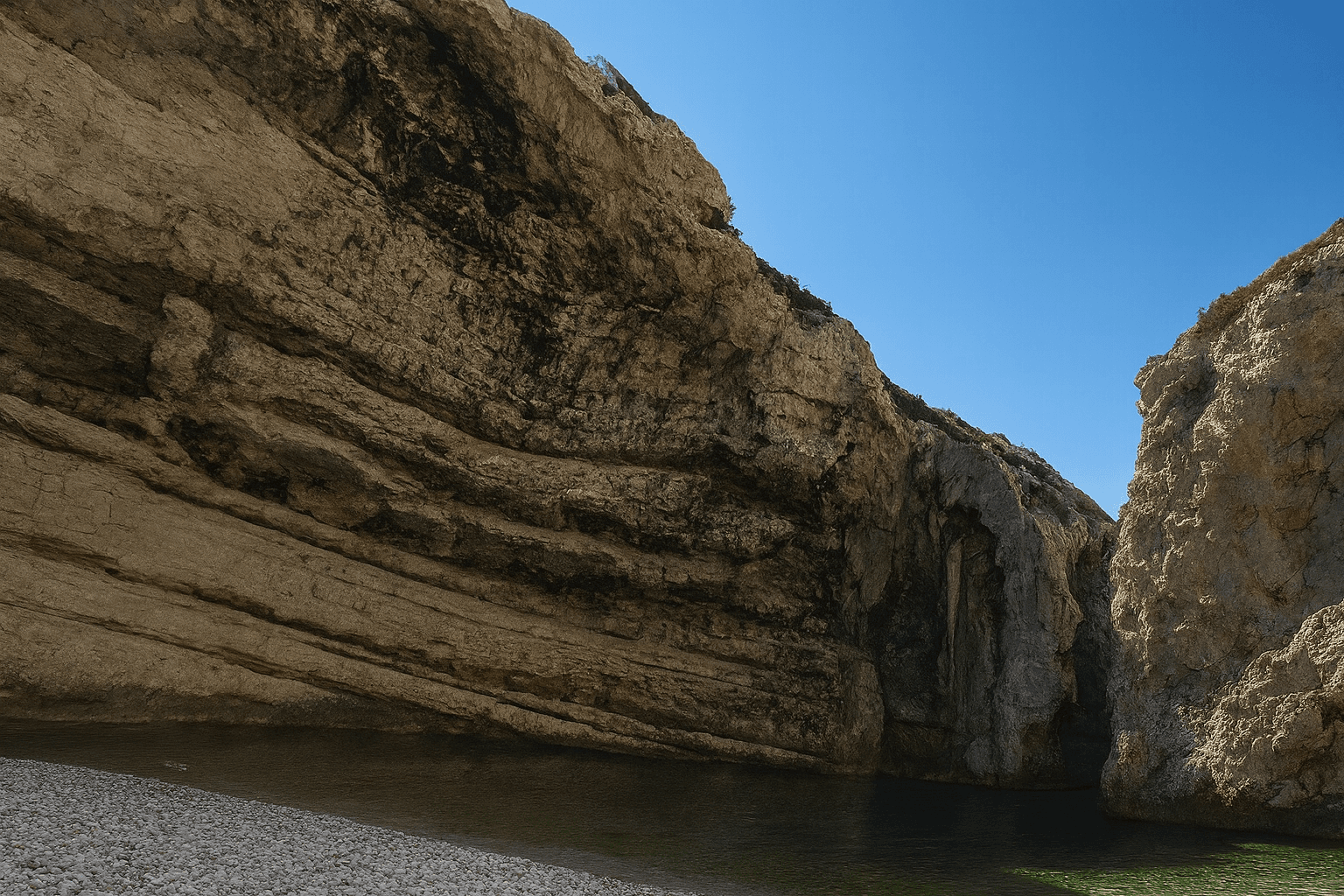
Croatia is the wreck capital of the Mediterranean, and most divers still haven't figured that out. Two world wars, a century of Austro-Hungarian shipping, and a coastline of over 1,200 islands have left the eastern Adriatic littered with steamers, minesweepers, torpedo boats and downed American bombers – many of them upright, intact, and sitting in water clear enough to see the whole hull from the shot line. Between the wrecks, the karst limestone that forms the Dalmatian islands does what karst does best: it drops away in vertical walls, splits into caverns and tunnels, and funnels midday sun into chambers that glow like cathedrals.
The diving splits into distinct regions. Istria in the north holds the great steamship wrecks, including the Baron Gautsch. The Zadar archipelago and Kornati National Park in the middle of the coast are cavern and wall country. Vis, the outermost inhabited island, was a closed Yugoslav military zone until 1989 – which is exactly why its WWII wrecks are so well preserved and its water so clean. Dubrovnik anchors the south with deep walls and its own protected wreck. Two things to know up front. First, nearly everything here is a boat dive – shore diving exists, but the sites worth crossing Europe for all sit off islands and capes. Second, the most famous wrecks lie beyond 30m, so an advanced certification (or better) is the key that unlocks Croatia; divers with deep or technical training will find some of the most rewarding depth-range diving in Europe, while newer divers still get caverns, shallow wrecks and walls that start at snorkel depth.
Best time to dive: May through October. The Adriatic hits 24-26°C (75-79°F) at the surface in August and drops to 12-14°C (54-57°F) in winter, when most operators close. Visibility runs 20-40m on the outer islands – best in the shoulder months before the summer plankton and boat traffic peak, and often spectacular in the day or two after a Bura has scoured the surface layer. September is the sweet spot: warm water, settled weather, and half the crowds of August. October still delivers 20°C water in the south, though operators start winding down.
Pro tip: Adriatic diving is ruled by two winds – the southerly Jugo, which builds long swell for days, and the cold northeasterly Bura, which can blow out a crossing overnight. Check conditions on DiveLine's Vis page for real-time swell and wind forecasts before you commit to an offshore trip.
1. Baron Gautsch
- Difficulty: Advanced
- Type: Boat dive (wreck)
- Depth: 35-40m (115-130ft)
- Visibility: Typically 8-12m (25-40ft)
The Baron Gautsch is the most famous wreck in the upper Adriatic – the 'Titanic of the Adriatic'. An 84.5m Austro-Hungarian Lloyd passenger steamer, she struck a mine in August 1914 with heavy loss of life and settled fully upright on the sand about 9 nautical miles southwest of Rovinj, on Istria's west coast. More than a century later she is still remarkably intact: the top deck sits near 28m, the seabed at 40m, and the rows of large window openings and hatches give her a scale you feel the moment you drop down the shot line.
The hull is thickly encrusted in sponges and shellfish, congers shelter in the recesses, and a resident population of small-spotted catsharks lives on the wreck – there is a local Rovinj research project dedicated to them. This is a protected national cultural-heritage monument, so you can only dive her with an authorized center, and that gatekeeping keeps the wreck in good shape. Treat it as a proper 40m dive: plan for narcosis and gas, expect variable current and reduced light, and leave penetration to trained wreck divers. The 40-45 minute crossing is fully exposed to Jugo and Bura, so build a weather day into your Istria plans.
2. Vassilios T Wreck
- Difficulty: Advanced
- Type: Boat dive (wreck)
- Depth: 30-55m (100-180ft)
- Visibility: Typically 15-25m (50-80ft)
The Vassilios T is one of the largest and best-preserved shipwrecks in the entire Adriatic: a 105m Greek cargo steamer that ran into the cliffs of Cape Stupišće in March 1939 while hauling coal from Swansea to Venice. She lies on her port side down the slope beneath the cape on Vis, a short 10-15 minute boat ride from the dive centers in Komiža. The starboard bow starts around 22m, the deck and superstructure run through the 25-40m band, and the propeller and lower hull trail off into technical territory at 45-55m.
At 105m long, a single tank only samples her – most divers do the bow and midships on the first visit and come back for the stern, and the Komiža operators are used to divers booking her twice in a week. There is usually a permanent mooring and descent line near the bow, which makes the deep drop straightforward. Congers and morays live inside the hull, big red scorpionfish sit camouflaged on the plating, and octopus work the coal still heaped in the holds. The masts and deck carry decades of yellow and orange sponge growth. Trained wreck divers can push into the holds and engine room, but the open-water exposure matters here: the cape takes the full force of a Jugo, so this is a dive for settled days.
3. B-17 Flying Fortress
- Difficulty: Technical (trimix required)
- Type: Boat dive (wreck)
- Depth: 70-72m (230-235ft)
- Visibility: Typically 25-30m (80-100ft)
The B-17 Flying Fortress off Cape Polivalo, near Rukavac on Vis's south coast, is one of the best-preserved WWII bombers in the world. Hit by flak returning from a raid over Austria, the B-17G ditched on 6 November 1944; nine of the eleven crew survived. She now sits upright on open sand at about 72m, wings spread, all four radial engines in place, cockpit still recognisable – an entire aircraft standing alone on an empty plain, with the 25-30m visibility Vis is known for making the whole silhouette readable from above.
This is a trimix-only dive with staged decompression, full redundancy, and hard limits on bottom time, run exclusively through the Vis technical centers that hold the permits and know the mark. It is also a war grave – the remains of a crew member are believed to be within the airframe, so it is dived with respect and nothing is touched. If 72m is beyond your ticket, Vis has a second legendary warbird: the B-24 Liberator 'Tulsamerican', whose main fuselage lies at about 41m – within reach of experienced recreational deep divers on a guided, permitted dive.
4. Blue Cave (Modra Špilja), Biševo
- Difficulty: Beginner
- Type: Boat dive (cavern)
- Depth: 8-15m (25-50ft)
- Visibility: Typically 9-15m (30-50ft)
The Blue Cave on Biševo, the small island southwest of Vis, is the Adriatic's most famous sea cavern – and diving it beats queuing for the tourist tender boats. Between about 11:00 and noon, sunlight refracts through a submerged opening and bounces off the white pebble floor, turning the entire chamber electric blue and silhouetting fish in silver. The cavern runs about 24m into the limestone, up to 15m high, with a maximum depth of around 16m and a natural rock arch at 6m. Boats have entered through a low artificial tunnel cut in 1884; divers get the better entrance.
This is the easy day on a Vis itinerary and a genuine option for newer divers – shallow, short, and unforgettable if you time the light right. Watch the constant tender traffic at the narrow entrance, and skip it entirely when Jugo or Bura push swell into the bay: surge builds fast inside the chamber and the operators will call it anyway. Pair it with the Teti, a heavily encrusted 1930 steamer wreck off Komiža that starts at 8m – together they make the best beginner double-header in Dalmatia.
5. The Dome (Vela Panitula)
- Difficulty: Intermediate
- Type: Boat dive (cavern & wall)
- Depth: 18-35m (60-115ft)
- Visibility: Typically 9-12m (30-40ft)
Ask the operators on Murter for the best dive in the Kornati Islands and most will say The Dome. It is a huge dome-shaped cavern, roughly 50m across, set into the exposed seaward flank of Vela Panitula just past Piskera bay. The vaulted ceiling is carpeted edge to edge in bright orange and yellow encrusting sponges and soft corals – swing a torch across it and the rock ignites. From about 30m, red gorgonian fans take over on the outer wall as it drops away below the cavern.
The layered profile is what makes it work for mixed groups: any certified diver can enjoy the shallower cavern sections, while the gorgonian wall below 30m is for experienced divers watching their depth and no-deco time. The site sits about 15 nautical miles out from Murter inside Kornati National Park, so you need a park permit through a licensed center and most operators run it as a full-day two-tank trip – typically pairing it with a second wall such as Rasip Veli or Borovnik on the way home. Lobster and octopus hide in the niches, scorpionfish hold the entrance, and on any southerly day the dome amplifies surge – another reason Kornati diving rewards a settled forecast.
6. Mana Wall
- Difficulty: Advanced
- Type: Boat dive (drift wall)
- Depth: 24-40m (80-130ft)
- Visibility: Typically 18-30m (60-100ft)
Mana Wall is the signature drop-off of Kornati National Park. Above the surface, Mana island carries the longest continuous sea-cliff in the archipelago – about 1,350m of sheer rock rising 77-100m out of the water – and the cliff simply keeps going underwater as a near-vertical face riddled with cracks, caverns and overhangs. The dive is run as a drift along the seaward southwest face, hanging off a wall densely decorated with yellow and red gorgonians, in the clear blue water the outer Kornati are famous for.
The wall falls well past 90m, but National Park rules cap recreational diving at 40m – and you will want to watch your gauge, because there is no ledge to catch you and the visibility makes 40m feel like 20. Congers, morays, lobster and slipper lobster pack the cracks; dentex, groupers and sea bream patrol the face while clouds of damselfish hang off the drop-off. Current along the cliff can be strong, so this is a guided drift with the boat tracking your bubbles. Like all park sites, it is boat-only through licensed operators, with crossings of one to two hours from Murter, Biograd, Zadar or Šibenik.
7. The Cathedral (Katedrala), Premuda
- Difficulty: Intermediate
- Type: Boat dive (cavern)
- Depth: 18-30m (60-100ft)
- Visibility: Typically 9-12m (30-40ft)
The Cathedral is the headline dive of the Zadar archipelago and one of the finest cavern dives in the Mediterranean. On the open-sea southwest coast of Premuda, the westernmost island in the chain, a complex of interconnected limestone chambers centers on a huge cupola-shaped hall with a white sand floor. The porous ceiling is pocked with holes, and around midday the sun drives down through them in fanned shafts of light – the stained-glass effect that earned the site its name. An upper entrance at about 11m and a lower one at 30m link the system together.
The bright, airy main halls stay within the daylight zone and suit any comfortable diver; a deeper tunnel pushing toward 50m is there for those with the training to use it. Because the ceiling is open in so many places, it never has the closed-in feel of a true cave – but it is still an overhead environment, so mind the sandy floor, keep your fins off the silt and stay within sight of daylight unless you are cavern-trained. Octopus, dentex and sea bream work the plateau outside, and morays, congers and lobster hold the crevices. Time your dive for midday sun and settled weather – the exposed bay mouth gets surgy in any south-to-southwest sea, and boats simply don't go in a Jugo. Technical divers should note what else Premuda offers: the SMS Szent István, a WWI Austro-Hungarian battleship, lies at 40-68m about ten nautical miles offshore.
8. Sveti Andrija (St. Andrew Wall)
- Difficulty: Advanced
- Type: Boat dive (wall)
- Depth: 30-80m (100-260ft)
- Visibility: Typically 15-30m (50-100ft)
Sveti Andrija is the most spectacular wall in southern Croatia – the outermost Elaphiti island, crowned by an 1873 lighthouse, about 6 nautical miles off Dubrovnik. The dive starts almost embarrassingly shallow at 3m on the sheltered side, then the bottom vanishes: a near-vertical face plunges to roughly 80m, broken by caves at 12m and 35m. The water clarity has earned it the nickname the 'St. Andrew Aquarium', and patches of increasingly rare Mediterranean red coral cling to the shaded crevices at depth.
Groupers and amberjacks cruise the blue, cardinalfish pack the caves, and the sponge-covered face alternates between dense growth and bare karst. The challenge here is discipline: on a wall this clear and this vertical, 40m arrives fast, and the red coral and deeper cave sit at technical depths. The seaward face is fully open to Jugo swell, so the 30-40 minute crossing runs only in calm weather. If you want Dubrovnik's other must-do, it is the Taranto – a 1943 mine casualty on a 45-degree slope from 10m to 51m near the Grebeni islets, with two of its cargo tractors still standing on the sand.
Planning Your Croatia Dives
Croatia works best as a two-base trip: fly into Pula or Zadar for the northern wrecks and Kornati, or into Split or Dubrovnik for the south. Vis is reached by ferry or catamaran from Split, and it deserves several days – between the Vassilios T, the bombers, the Teti and the Blue Cave, it is the densest concentration of world-class sites in the country. The Split area itself is a strong middle base, with sites around Brač, Šolta and Hvar such as the Lučice Cave on Brač. Nearly every site in this guide is boat-access only, so book with local centers rather than planning shore dives – and book early for July and August, when the good operators on Vis and in Rovinj fill weeks ahead. If your logbook is thin on deep dives, plan the trip as a progression: warm up on the Teti or a Kornati wall, then take on the Baron Gautsch or Vassilios T once you have your Adriatic buoyancy dialed in.
- Certifications: The famous wrecks sit at 30m+ – bring at least an advanced/deep certification, and trimix credentials for the B-17 class of dives
- Protected wrecks: Baron Gautsch, the Vis bombers and the Taranto are heritage sites – guided dives through authorized centers only, with permits arranged for you
- Kornati National Park: Entry tickets, licensed operators and a 40m depth cap apply to every dive inside the park
- Thermal protection: A 5mm suit works in high summer, but bring a 7mm or drysuit in the shoulder months – thermoclines below 20m bite even in August
- Weather margin: Jugo swell and Bura wind cancel offshore trips regularly – build spare days around the exposed sites like Baron Gautsch and Sveti Andrija
What makes Croatia special is the range packed into one coastline: you can drift a gorgonian wall in a national park, hang in a sunbeam inside a limestone cathedral, and stand on the deck of a century-old steamer – all in the same week, all in 20m-plus visibility. Few places in Europe reward an advanced certification this generously.
Ready to dive the Adriatic? Check real-time swell, wind and visibility forecasts for every site in this guide on DiveLine's Vis page, or browse the area pages for Rovinj, Zadar, the Kornati Islands, Split and Dubrovnik.