Best Dive Sites in Sardinia, Italy: A Diver's Guide
From the largest sea cave in the Mediterranean to granite pinnacles thick with grouper – the definitive guide to diving the Alghero coast, Tavolara, La Maddalena, and beyond
DiveLine Team
2026-07-06
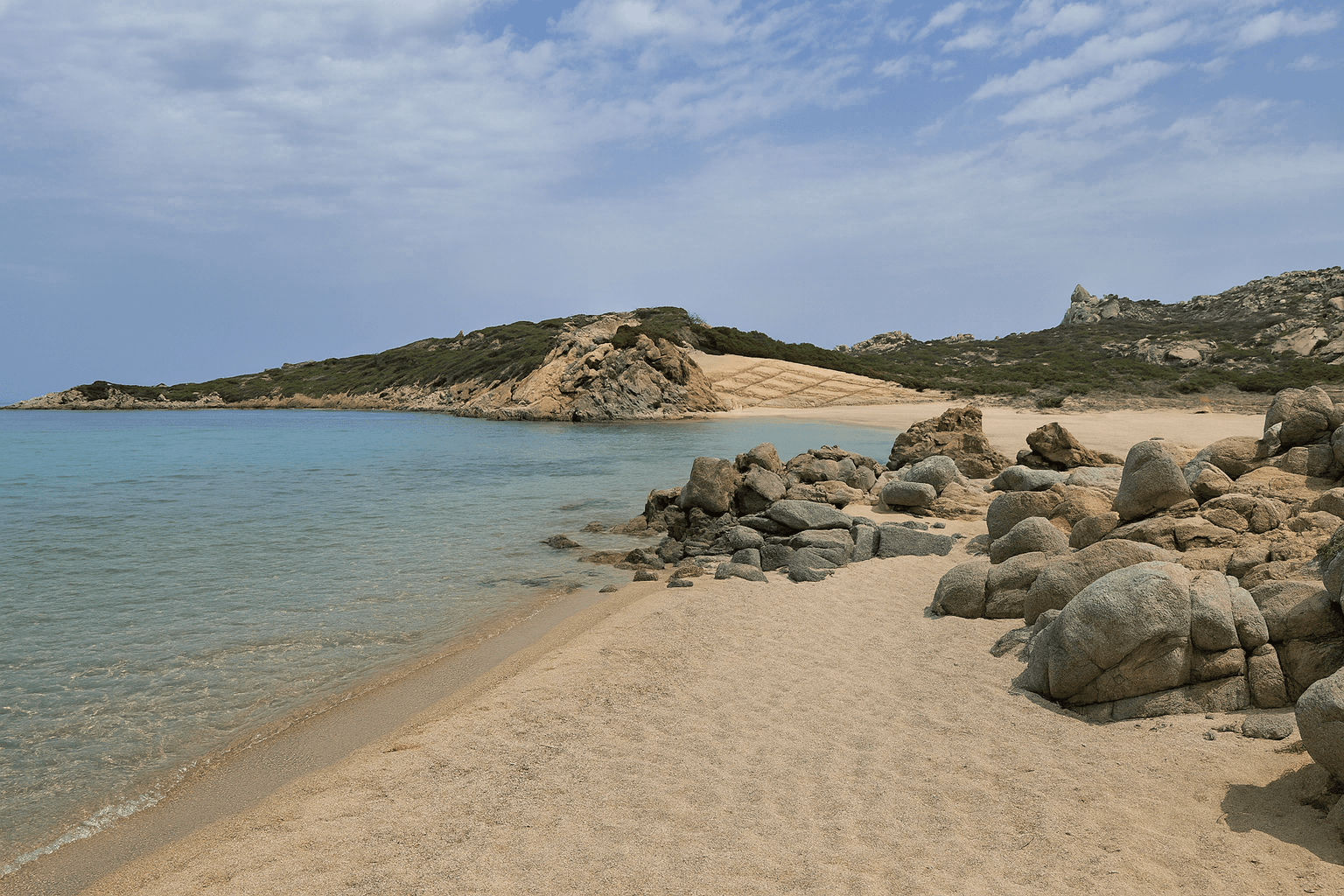
The Best Dive Sites in Sardinia
Ask anyone who works in Mediterranean diving where the clearest water in Italy is and the conversation ends at Sardinia. The island sits far from mainland runoff in the middle of the western Med, its coastline alternates between pale granite and sheer limestone, and its best diving is locked inside marine protected areas that have had decades to recover. The payoff is water that regularly delivers 20-40 m of visibility over terrain that would be worth diving even in murk: the largest sea cave in the Mediterranean, gorgonian-covered pinnacles, WWII wrecks on white sand, and dusky groupers that have grown old and enormous under full protection.
On DiveLine, the island is split into two areas. The Alghero area covers the Riviera del Corallo on the northwest coast, where the 110 m limestone cliffs of Capo Caccia continue straight underwater as walls, canyons and a famous cluster of sea caves. The Sardinia area covers the marquee sites around the rest of the island: the Tavolara and Capo Carbonara marine protected areas, the granite shoals of the La Maddalena Archipelago at the mouth of the Strait of Bonifacio, and the wreck coast of the Gulf of Orosei. The eight dives below span both areas, and they are the ones we would build a trip around.
Best time to dive: May through October. The sea swings from around 14°C in winter to 25°C at the August peak, and visibility runs 20-40 m through most of the season. June combines pleasant water with the year's best gorgonian colour, while September and October pair a still-warm sea with empty boats and settled weather windows.
Pro tip: Check conditions on DiveLine's Sardinia page and Alghero page for real-time visibility, swell, and wind forecasts – the west-facing sites at Capo Caccia can be flat calm one day and blown out by the Mistral the next.
1. Grotta di Nereo (Nereo Cave)
- Difficulty: Intermediate
- Type: Boat dive
- Depth: 18-33 m (60-110 ft)
- Visibility: Typically 20-30 m (65-100 ft)
Grotta di Nereo is the dive that put Alghero on the map and the single most famous site in this guide. Generally reckoned the largest sea cave in the Mediterranean, Nereo is a 300-metre-plus network of arches, tunnels and chambers with around ten entrances strung along the base of the Capo Caccia cliffs between roughly 16 and 30 m, about 100 m north of the tourist-famous Neptune's Grotto. The classic circuit enters through the deep, red-coral-lined main portal, climbs through a connecting tunnel to a light-filled chamber, and returns along a wide white-sand gallery with the exit glowing blue ahead of you – a route so naturally well designed that it works as an ideal first cave dive while still drawing photographers back for their hundredth.
The walls are the point. Corallium rubrum – the precious red coral that gave the Riviera del Corallo its name – grows here at recreational depths, alongside colonies of yellow Leptopsammia cup coral, sponges and dense invertebrate growth. Big conger eels and morays hold the crevices, lobsters and slipper lobsters pack the ceilings, and octopus and scorpionfish work the entrances. Treat it as a real overhead environment all the same: dive it with one of the authorized Alghero or Porto Conte operators, carry a primary light and a backup, keep your trim tight over the pale sand, and hold generous gas reserves for the circuit. It books out fast in peak season, so reserve it before you land.
2. Capo Caccia Walls (Lungo le Falesie)
- Difficulty: Intermediate
- Type: Boat dive
- Depth: 21-40 m (70-130 ft)
- Visibility: Typically 20-30 m (65-100 ft)
The sheer limestone cliffs of Capo Caccia are the geological signature of the Alghero coast, and at Capo Caccia Walls they simply keep going underwater – a vertical, current-fed drop-off plunging past 30-40 m into open blue. This is the open-water counterpart to the area's cave dives, usually run from the same boat on the same outing as Nereo, and it is the dive to pick when you want scale: hang off the wall at 25 m, look up at 110 m of cliff punching through the surface and down into the dark, and the topography does the rest.
The face carries classic Mediterranean coralligenous growth – encrusting sponges, cup corals and small soft corals – with red coral tucked into the deeper, shaded fissures, the same species that built Alghero's centuries-old coral-jewellery trade. Groupers, dentex and snappers patrol the wall, morays and lobsters hold the cracks, and the water column off the drop is always worth a glance for passing pelagics. The site sits at the exposed southwest tip of the promontory, so it is a settled-weather dive: operators run it from May to October and reroute to the sheltered side of the cape when the Mistral is working.
3. Il Sommergibile
- Difficulty: Advanced
- Type: Boat dive
- Depth: 26-40 m (85-130 ft)
- Visibility: Typically 20-30 m (65-100 ft)
Il Sommergibile is the other great canyon dive of Capo Caccia and the site experienced divers tend to rank right alongside Nereo. The name comes from an overhanging rock projection dropping to about 35 m that, seen from below, looks convincingly like the hull of a surfacing submarine. Between that reef and the base of the cliff a deep canyon opens up, 6-8 m wide and running from around 30 m down to 38 m, with the Tunnel and Sifone caves set into the wall. The classic route drops onto the reef, threads the canyon, then passes through the 40-metre Sommergibile tunnel under coral-crusted arches before emerging back in front of the mooring.
Everything here is deep, vertical and vividly coloured. The canyon and tunnel vaults are carpeted in yellow cluster anemones, red and orange gorgonians, sponges and ascidians that ignite under a dive light, while large dusky groupers and big corvina patrol the wall – the Capo Caccia-Isola Piana Marine Protected Area has kept fish size and numbers conspicuously high. Plan it as a proper deep dive: the best terrain sits between 30 and 38 m, so nitrox and disciplined gas planning pay real dividends. The site faces due west into open sea directly below the Escala del Cabirol staircase, and like the walls it only runs when the weather cooperates.
4. Secca di Washington (Secca di Spargi)
- Difficulty: Intermediate
- Type: Boat dive
- Depth: 18-35 m (60-115 ft)
- Visibility: Typically 20-30 m (65-100 ft)
Cross to the island's north coast and the rock changes from limestone to granite. Secca di Washington is the signature dive of the La Maddalena Archipelago National Park and one of the most-booked sites out of Palau and La Maddalena: a huge shoal of eroded granite boulders, ledges, passages and small caves rising from the archipelago platform at 35 m to a summit at just 6 m. Four mooring buoys mark the start of several established routes – the Classic, the Mushroom, the Arch – so guides can match the lap to the group, though current and the deeper circuits give the site a solidly intermediate character.
This is grouper country. The protected dusky grouper population of the Strait of Bonifacio – the one that made Lavezzi famous just across the water on the Corsican side – extends through the Maddalena archipelago, and the residents here are big, curious and completely unbothered by divers. Corvina, white seabream, dentex and barracuda work the boulder canyons, amberjack and tuna push through the channel in season, and the shaded vertical faces are draped in red gorgonians and yellow sea daisies against sunlit slabs of photophilic algae. Diving inside the national park is on fixed moorings with authorized operators only; runs from Palau or La Maddalena take 20-40 minutes.
5. Secca del Papa
- Difficulty: Advanced
- Type: Boat dive
- Depth: 30-45 m (100-150 ft)
- Visibility: Typically 24-35 m (80-115 ft)
Secca del Papa is the flagship of the Tavolara-Punta Coda Cavallo Marine Protected Area and turns up on virtually every list of the finest dives in the Mediterranean. Three hundred metres east of Punta del Papa, a massive granite-and-limestone shoal rises from a detrital bottom near 45 m into two pinnacles split by a sandy channel: Papa 1, topping out around 15 m, and Papa 2, topping near 24 m. Access is permit-only through authorized Tavolara dive centres – a 15-20 minute crossing from Porto San Paolo – and that restriction is exactly why the site still looks the way it does.
The pinnacle walls carry some of the densest gorgonian growth in Italian waters – deep-red Paramuricea clavata forests interplanted with yellow Eunicella – and the fish life matches the décor: large resident dusky groupers at arm's length, thick schools of barracuda over the summits, dentex and amberjack hunting the damselfish clouds, and seasonal cameos from eagle rays and sunfish. Treat it as a genuinely advanced dive. The rewarding terrain starts below 25 m, current feeds the site (that is what grows the gorgonians), and a 45 m floor leaves no margin for sloppy buoyancy. On nitrox with a comfortable no-deco plan, this is as good as Mediterranean reef diving gets.
6. Relitto KT-12 (KT12 Wreck)
- Difficulty: Advanced
- Type: Boat dive
- Depth: 27-34 m (90-110 ft)
- Visibility: Typically 20-30 m (65-100 ft)
Sardinia's east coast answers the granite and the caves with steel. The Relitto KT-12 is the signature wreck of the Gulf of Orosei and the flagship deep dive for every Cala Gonone operator: a German KT-class armed transporter (Kriegstransporter) torpedoed in 1943 by the British submarine HMS Safari, which tore the hull in two off Marina di Orosei. She now lies on open sand at 33-34 m, the bow section resting a short swim from the main hull, with the stern deck gun, the propeller and rudder, and the ragged torpedo tear as the headline features, plus open cargo holds and scattered wreckage to pick through.
As the only structure on a flat sand plain, the wreck works like an oasis: resident dusky groupers and morays live in the hull, lobster and slipper lobster pack the holds and plating, triggerfish patrol the deck, and bream and damselfish cloud the whole site, with amberjack and barracuda passing overhead in season. Sitting at 24-34 m in the typically clear water of this coast, it is the textbook first wreck for a fresh Advanced Open Water card – deep enough to demand planning, shallow enough to enjoy. It is dived exclusively with local operators out of Cala Gonone or Orosei, roughly a 30-35 minute run to the mooring.
7. La Nave / Variglioni dei Cavoli
- Difficulty: Intermediate
- Type: Boat dive
- Depth: 24-38 m (80-125 ft)
- Visibility: Typically 20-30 m (65-100 ft)
In the island's southeast corner, the Capo Carbonara Marine Protected Area off Villasimius protects some of Sardinia's most photogenic granite. La Nave / Variglioni dei Cavoli is its classic boat dive: wave-sculpted rocks off Isola dei Cavoli that break the surface and continue down as a chaos of stacked boulders, fissures, swim-throughs and pinnacles cascading to sand past 40 m. The signature feature is 'La Nave Romana', a granite monolith eroded into the shape of a ship's bow – the kind of formation that explains why every south-Sardinia operator keeps this site on permanent rotation.
The terrain builds a natural multi-level profile: start deep among the pinnacles and cup-coral-lined fissures, work up through the boulder maze where large dusky groupers, sea bream, dentex and roving barracuda shoals patrol, and finish in the sunlit shallows with mullet and salema. Shaded cracks hold orange madrepore colonies, yellow cluster anemones, sponges and gorgonians, and the reserve's protection means turtles and dolphins pass through often enough to keep you checking the blue. Crossings from Villasimius run 15-30 minutes, and dives are made with authorized MPA operators on reserve permits.
8. Madonna del Naufrago
- Difficulty: Beginner
- Type: Boat dive
- Depth: 9-12 m (30-40 ft)
- Visibility: Typically 15-30 m (50-100 ft)
Madonna del Naufrago is the icon of Villasimius and the gentlest dive in this guide. In July 1979 the Sub Sinnai dive club sank a three-metre pink-trachyte statue of the Madonna and Child, carved by the Sardinian sculptor Pinuccio Sciola, onto the granite seabed beside Isola dei Cavoli as a memorial to those lost at sea. It stands at about 11 m inside the Capo Carbonara MPA, pale enough to be visible from the surface with a mask, and every July a procession of flower-covered boats sails out to honour it.
As a dive it is exactly what a shallow protected granite reef should be: saddled bream, white and two-banded seabream, salema and damselfish over the boulders, ornate and rainbow wrasse in the weed, octopus and morays in the cracks, and the statue itself slowly acquiring a living crust of algae and invertebrates. Use it as a check dive on day one, a relaxed second tank after the Variglioni, or bring non-diving companions along – it is one of the few world-class Sardinian sites that works equally well as a snorkel. Boat access only, with regulated moorings inside the reserve.
Planning Your Sardinia Dives
Sardinia is a big island, so budget your travel time. Alghero has its own airport and puts you 30 minutes from the Capo Caccia boats; Olbia serves Tavolara and the La Maddalena archipelago in the north; Cagliari is the gateway for Villasimius and the south. A hire car is effectively mandatory. Almost everything worth diving sits inside a marine protected area, which in practice means diving on fixed moorings with authorized local operators – there is no self-guided boat diving at the marquee sites, and in high season the licensed boats fill up, so book ahead.
- Split your base: A week works well as three or four days in Alghero for the caves and walls, then Palau or Porto San Paolo for the granite of La Maddalena and Tavolara
- MPA permits: Tavolara, La Maddalena, Capo Carbonara and Capo Caccia all require authorized operators – factor the permit logistics into short trips
- Thermal protection: A 5mm suit covers July through September; bring a 7mm or semi-dry for May, June and October, and expect thermoclines on the deeper pinnacles
- Lights: The Alghero caves and canyons demand a primary light plus a backup – the red coral and yellow anemone colour simply is not there without them
- Weather routing: West-facing Capo Caccia blows out in a Mistral while the east coast often stays diveable – keep sites on both coasts in the plan
Few Mediterranean destinations can fill two weeks of diving without repeating themselves; Sardinia can. You can spend a morning inside the largest sea cave in the Med, put a WWII wreck in the logbook the next day, and end the week hanging off a gorgonian-covered pinnacle while a grouper the size of a labrador inspects your camera. The island rewards divers who plan around its protected areas rather than against them – the permits and fixed moorings that constrain access are precisely what have kept the diving this good.
Ready to dive? Check current conditions for every site in this guide on DiveLine's Sardinia page and Alghero page.