Best Dive Sites in Crete, Greece: A Diver's Guide
From the fossil-filled Elephant Cave to a WWII Messerschmitt resting on the sand – caverns, wrecks, and walls across Greece's largest island
DiveLine Team
2026-07-06
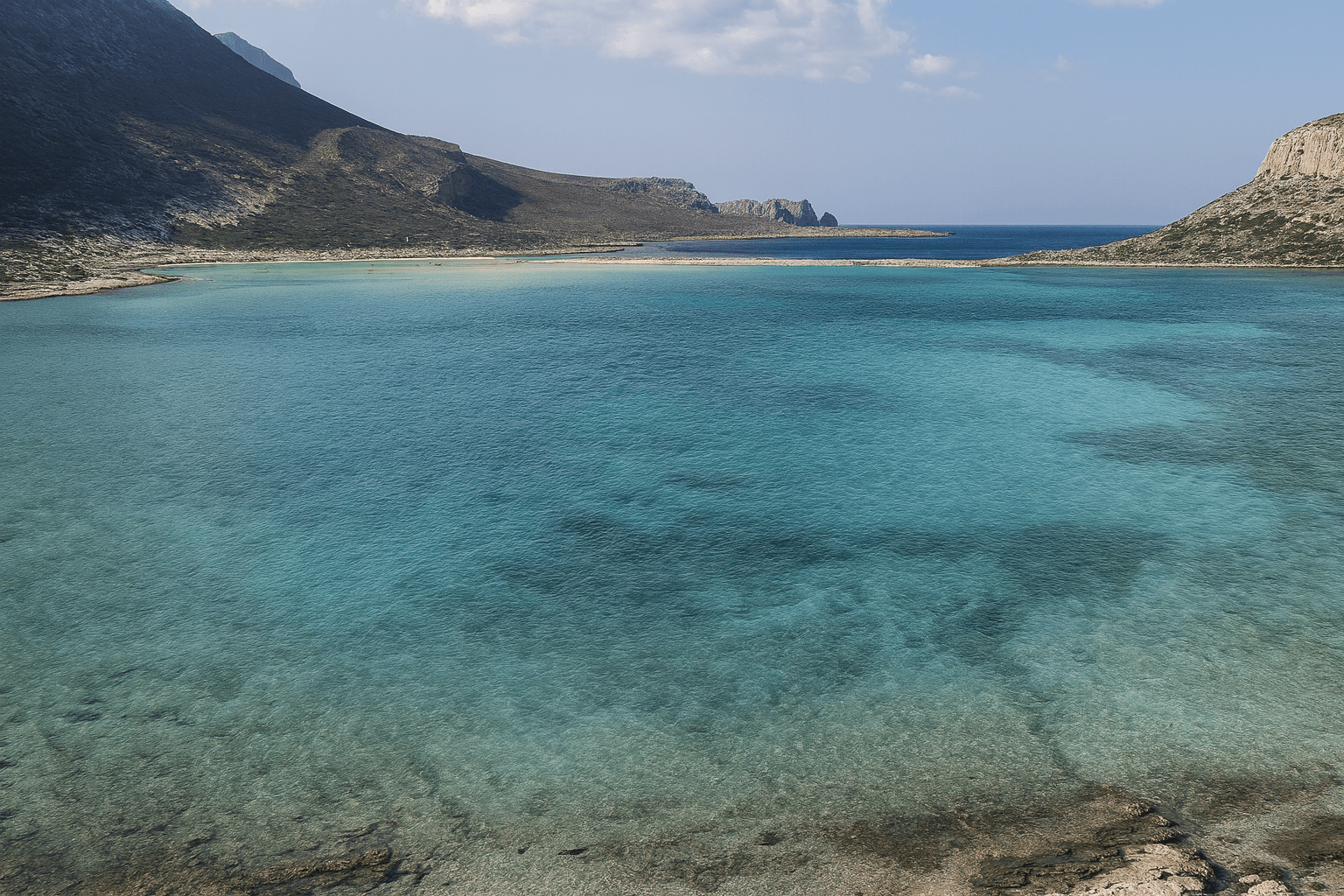
The Best Dive Sites in Crete
Crete is Greece's largest island and arguably its most complete diving destination. The same limestone that built the White Mountains continues underwater, riddling the north coast with submerged caverns hung with stalactites – some holding Ice Age elephant fossils, others hiding air chambers you can surface inside. Add wrecks from two world wars, the sheer walls of an uninhabited Natura 2000 island, and a south coast that faces the Libyan Sea, and you get three distinct dive regions in one destination: Chania in the west, Heraklion and Agia Pelagia in the center, and Plakias in the south. Each has a legitimate signature site, and no single base puts them all within day-trip range – plan accordingly.
Best time to dive: April through November. Water temperature climbs from around 16°C (61°F) in winter to 25-26°C (77-79°F) in August, and visibility routinely runs 20-40 m (65-130 ft) – this is some of the clearest water in the Mediterranean. The summer Meltemi wind can blow out exposed north-coast sites for a day or two at a time; when it does, operators fall back to sheltered Souda Bay, or you drive south to the Libyan Sea coast.
Pro tip: Check conditions on DiveLine's Crete page for real-time visibility, swell, and wind forecasts before deciding which coast to dive.
1. Elephant Cave
- Difficulty: Intermediate
- Type: Boat dive (cavern)
- Depth: 8-12 m (25-40 ft)
- Visibility: Typically 25-30 m (80-100 ft)
Elephant Cave is widely cited as the finest dive in Crete, and it earns the billing. Discovered by a spearfisher in 1999 on the open coast of Cape Drapano just outside Souda Bay, the cavern entrance sits at about 10 m and leads through a 40 m tunnel into an immense hall roughly 125 m across, hung with red-and-white stalactites and stalagmites. The name comes from what was found inside: the fossilized bones of Elephas chaniensis, an extinct dwarf elephant, lying alongside deer remains dated to 50,000-60,000 years ago. You are quite literally finning through an Ice Age bone bed.
As cavern dives go, this one is forgiving – the entrance is shallow and current-free, the profile stays comfortable, and Chania-area operators run it as a guided trip with a boat ride of just 10-20 minutes from the nearest harbors. Bring a good torch; the light effects near the entrance are the photographic payoff, and the deeper hall is about geology and fossils rather than fish. Groupers, morays, scorpionfish, and octopus work the rocky entrance zone. Most operators pair it with the SS Minnewaska wreck nearby for a two-tank day, which is exactly how it should be dived.
2. The Cathedral (Cathedral Cave)
- Difficulty: Intermediate
- Type: Boat dive (cavern)
- Depth: 15-21 m (50-70 ft)
- Visibility: Typically 20-30 m (65-100 ft)
The Cathedral is the showpiece of the Chania dive scene and Elephant Cave's closest rival. The chamber opens in a cliff on the exposed north coast of the Akrotiri peninsula at about 14 m and bottoms out around 21 m. What makes it remarkable is how it got here: this was once a dry cave, and geologists link its submergence to the tsunami generated by the Minoan-era eruption of Santorini. The stalactites and stalagmites that formed in open air are still intact underwater – a drowned piece of Bronze Age catastrophe you can swim through.
Inside, shafts of light cut through the entrance and rake across the formations, and cool freshwater seeping from the rock creates shimmering haloclines – brief one-degree temperature shifts and a blurred, oily-looking mixing layer that photographers either love or curse. Operators reach the site by fast RHIB from Marathi harbor or Chania Old Harbour in 10-20 minutes. Because the headland is exposed, trips are conditions-dependent; the Meltemi cancels this one before it cancels anything inside Souda Bay. A torch is essential, and all cavern dives here are guided.
3. El Greco Cave
- Difficulty: Advanced
- Type: Boat dive (cavern)
- Depth: 18-26 m (60-85 ft)
- Visibility: Typically 25-30 m (80-100 ft)
El Greco Cave is the signature deep cavern of Agia Pelagia, about 20 km west of Heraklion, and the eastern counterpart to the Chania caves. The dive starts with a descent down a rock wall in deep blue water to a wide cave mouth at about 17 m, then runs some 30 m into the cliff through a chamber hung with stalactites and stalagmites. Fresh groundwater seeps from the roof in places, shimmering with visible iridescence where it meets the salt.
The party trick comes at the far end: a vertical siphon with a fixed rope leads up into an air-filled chamber inside the rock, where you can surface, take the regulator out, and talk – sitting in a pocket of air deep inside a Cretan cliff. The generous entrance, straight sight-line back to daylight, and hard bottom make it a well-behaved cavern, but the overhead environment, the depth, and that air space put it firmly in advanced territory. It's a boat hop of only a few minutes from Agia Pelagia's main beach, so operators typically combine it with a nearby reef dive.
4. Messerschmitt Bf-109 Wreck
- Difficulty: Advanced
- Type: Boat dive (wreck)
- Depth: 24-30 m (80-100 ft)
- Visibility: Typically 20-30 m (65-100 ft)
The Messerschmitt Bf-109 is the iconic aircraft wreck of central Crete and the bucket-list dive of the Heraklion coast. The German fighter – popularly tied to the 1941 Battle of Crete, though the airframe is often identified as a later G-6/F-4 variant – rests upside down on a sandy bottom about 800 m offshore of Anissaras, near Hersonissos. The main fuselage and wings sit at around 24 m with the cockpit, machine guns, and ammunition belts still visible; the broken-off tail section lies roughly 50 m away at about 30 m.
Large dusky groupers shelter under the wings and moray eels occupy gaps in the airframe, so there's life here as well as history. The logistics are what make it an experienced-diver site: the wreck is GPS-marked with no permanent mooring, so boats drop divers on the spot, and the ascent is done on a deployed SMB – particularly when current is running, which it sometimes is. Count on a 20-30 minute boat ride from the Hersonissos-area harbors and keep an eye on your no-deco time; at 24-30 m over sand, it evaporates quickly.
5. SS Minnewaska Wreck
- Difficulty: Intermediate
- Type: Boat dive (wreck)
- Depth: 15-20 m (50-65 ft)
- Visibility: Typically 20-30 m (65-100 ft)
The SS Minnewaska is Crete's classic accessible shipwreck, with a backstory worthy of the dive. Built by Harland & Wolff in Belfast in 1908 as a 183 m ocean liner and requisitioned as a British WWI troopship, she struck a mine laid by the German submarine UC-23 in November 1916 while leaving Souda Bay with troops from Alexandria. Her captain drove her aground to save everyone aboard – and succeeded. Later salvage work flattened her, and today the sprawling remains, including a roughly 50 m section of hull and machinery, lie off Cape Deutero near Marathi at the mouth of the bay.
Sitting mostly between 12 and 20 m on sand in the sheltered entrance of Souda Bay, this is an easy, current-free wreck that stays diveable year-round in most conditions – roughly 10 minutes by boat from Kalyves port. It rewards a slow, methodical mooch: plate sections, machinery, and a century of marine growth spread across the bottom rather than one photogenic hull. It's the natural second dive after Elephant Cave, which sits just around the cape, and most Chania operators run exactly that combination.
6. Dia Island (Petalidi)
- Difficulty: Intermediate
- Type: Boat dive (wall)
- Depth: 18-32 m (60-105 ft)
- Visibility: Typically 40-50 m (130-165 ft)
Petalidi is the premier wall dive at Dia, the uninhabited Natura 2000 island 7-9 nautical miles north of Heraklion. The site wraps the seaward north-west face of the small Petalidi islet off Dia's corner, where vertical walls and drop-offs fall from a shallow 7-8 m shoulder down past 30 m through some of the clearest water in Greece – visibility regularly tops 50 m for much of the year. The seascape is a wild jumble of huge boulders punctuated by small swim-through caves, which keeps the dive interesting at every depth.
The reserve status shows in the fish life: shoals of sardines gather along the walls and draw in large groupers and the occasional seasonal pelagic, while octopus and cuttlefish work the boulder field. Getting there means a 30-40 minute crossing from Agia Pelagia or Heraklion, and trips usually require a minimum group, so book ahead rather than hoping to walk on. The island sits in open water and takes the full force of the Meltemi, so this is a calm-day dive – typically run as a two-tank day trip paired with the Paksimadi site on Dia's east side.
7. Shinaria Bay
- Difficulty: Intermediate
- Type: Shore dive (beach entry)
- Depth: 15-30 m (50-100 ft)
- Visibility: Typically 25-40 m (80-130 ft)
Shinaria is the iconic shore dive of southern Crete and the hub of the Plakias dive scene, in a small sandy bay below the village of Lefkogia on the Libyan Sea coast. From an easy beach entry you cross a sun-lit sandy shelf to a drop-off that steps down from about 12 to 25 m. The signature feature is a large cavern at around 18 m whose ceiling is pierced by cracks – shafts of sunlight pour through into the chamber – backed up by a network of canyons and swim-throughs along the wall.
Because the bulk of Crete shelters this coast from the prevailing north wind, Shinaria delivers dependable, exceptionally clear water when the Meltemi has flattened the north-coast schedule – it's the island's best bad-weather insurance. The site genuinely works for everyone: open-water students train on the shallow shelf while experienced divers run the wall and cavern. There's a taverna, loungers, showers, and toilets at the beach, but parking is tight and the final approach is a narrow, partly unpaved lane – arrive early in high summer. Plakias dive centers use the bay as their main shore base and shuttle gear down.
Planning Your Crete Dives
Crete is a 250 km long island, and its diving splits cleanly into regions – don't try to do it all from one base. Chania in the west owns the caverns (Elephant Cave, The Cathedral) plus the Minnewaska, and has a new drawcard in the Chania Diving Park, Greece's first authorized underwater park, built around the scuttled Nestor tugboat and Folegandros landing ship. The Heraklion/Agia Pelagia stretch has El Greco, the Messerschmitt, and Dia Island. Plakias covers the south. If you have non-diving days in the east, the Sunken City of Olous near Elounda is a walk-in archaeological shallow dive over the ruins of an ancient drowned port. Both Chania and Heraklion have international airports, so an open-jaw itinerary is easy.
- Split your bases: Chania for the caverns and wrecks, Heraklion or Agia Pelagia for the east – a week comfortably covers both
- Thermal protection: 5 mm wetsuit in high summer, 7 mm in the shoulder months; the caverns and haloclines run cooler than the open water
- Cavern dives are guided: Bring or rent a good torch, watch your fins around the formations, and follow the briefing on penetration limits
- Meltemi days: The sheltered Souda Bay mouth usually stays diveable, and Shinaria on the south coast almost always does
- Book ahead: Dia Island and the Messerschmitt run on minimum group sizes, and peak-season boats fill fast
Few Mediterranean destinations put this much variety inside one island: Ice Age fossils in a stalactite hall in the morning, a WWI liner in the afternoon, a WWII fighter the next day, and a 40 m-visibility wall at an uninhabited island reserve after that. Give Crete a full week and two bases, and it will hold its own against destinations with far bigger reputations.
Ready to dive? Check current conditions for all Crete sites on DiveLine's Crete page.