Best Dive Sites on the Costa Brava, Spain: A Diver's Guide
Catalonia's wild coast – from the grouper-thick caverns of the Medes Islands marine reserve to the current-swept pinnacle of Massa d'Or
DiveLine Team
2026-07-06
The Best Dive Sites on the Costa Brava
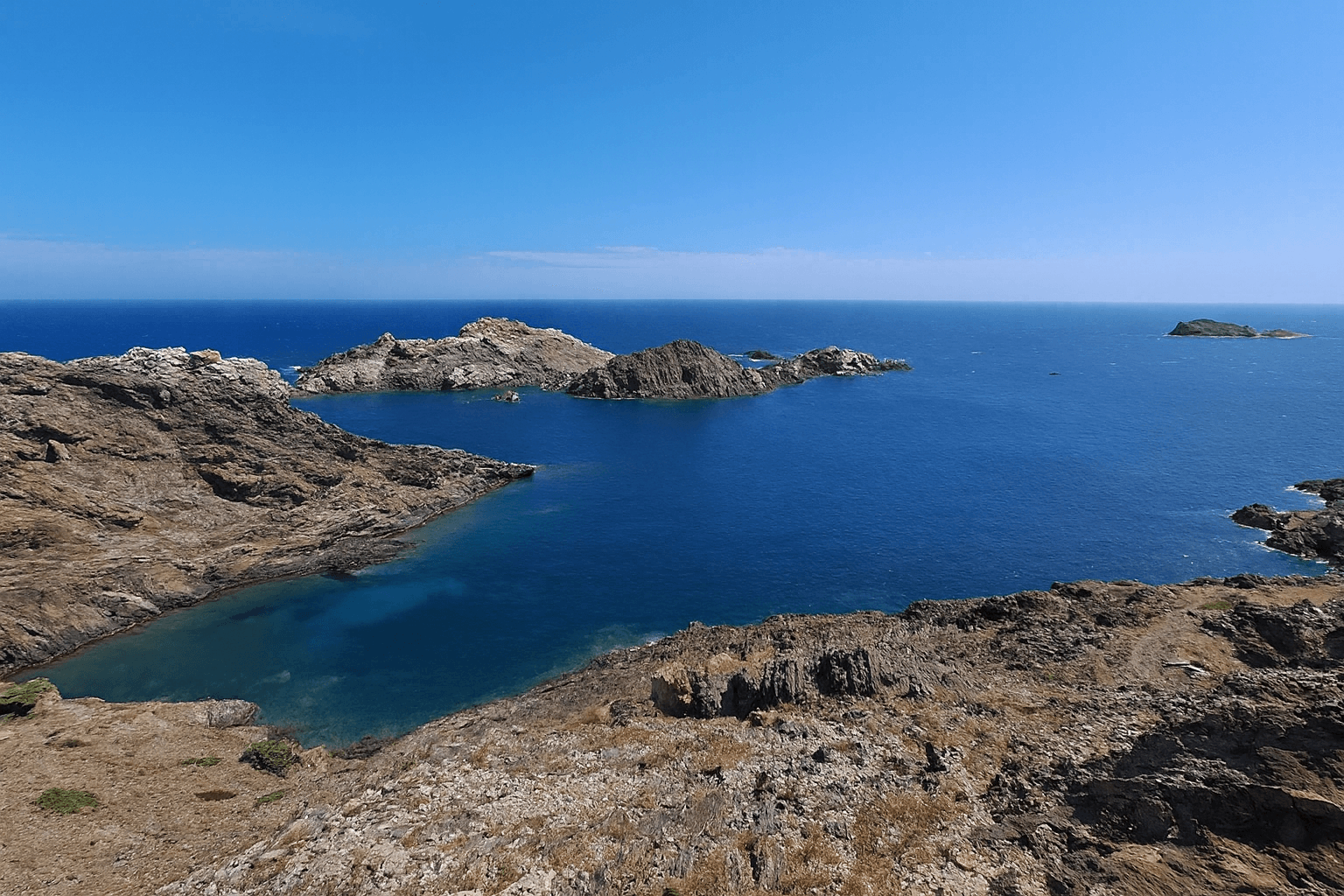
The Costa Brava earned its name – the 'wild coast' – from the granite and limestone headlands that drop straight into the Mediterranean along Catalonia's northeastern shore. For divers, that geology keeps going underwater: swim-through tunnels, sheer gorgonian walls, offshore pinnacles, and some of the densest fish life in the western Mediterranean. At its heart sits the Medes Islands marine reserve off L'Estartit, where decades of strict protection have produced dusky groupers so large and so indifferent to divers that they have become the region's calling card. Add two of Spain's finest wrecks, a WWI casualty you can reach from the beach, and the raw seamounts of Cap de Creus, and you have a coastline that rewards everyone from newly certified divers to experienced deep-wreck specialists.
Best time to dive: May through October is the main season. Water temperature climbs from around 13°C (55°F) in winter to 23-25°C (73-77°F) in late summer, and visibility typically runs 10-25m (35-80ft), improving as the early-summer plankton clears. June and September hit the sweet spot: warm water, strong visibility, and far thinner crowds than the August peak. Note the thermocline – even in August it can be 15-16°C (60°F) below 20m.
Pro tip: Check conditions on DiveLine's Costa Brava page for real-time visibility, swell, and wind forecasts before planning your trip. The two winds that rule this coast pull in opposite directions – a northerly Tramuntana can shut down Cap de Creus while the sheltered coves stay flat, and an easterly Llevant does the reverse.
1. La Vaca (Cow Cave), Medes Islands
- Difficulty: Intermediate
- Type: Boat dive (cavern swim-through)
- Depth: 15-30m (50-100ft)
- Visibility: Typically 15-30m (50-100ft)
La Vaca is the signature dive of the Medes Islands and arguably the most famous single site on the Costa Brava. A tunnel roughly 30m long and 5m wide pierces clean through Punta de la Galera on Meda Gran, the largest of the islands, with three entrances feeding the main passage plus branching side caves and rock pillars. The southern entrance sits at about 12m (40ft), and the passage is wide and bright enough that you can see the exit glow for the entire swim-through – a cavern dive in the best sense, with dramatic light shafts that make it a fixture on every underwater photographer's list.
The walls inside and out are draped in red and yellow gorgonians, with patches of red coral in the shaded sections, and the reserve's hallmark dusky groupers routinely hold station at the entrances alongside morays, congers, octopus, and lobster. Beyond the far exit, a vertical gorgonian wall drops to a platform of fallen blocks with depth available past 28m (90ft). Diving inside the reserve is regulated – permits, a daily diver cap, no try-dives, no night diving – and that regulation is precisely why the fish life is this good. Carry a torch for the side caves, keep your fins off the walls, and ascend on the mooring line: boat traffic around the islands is heavy in summer.
2. Dofí (Dolphin Cave) / Carall Bernat, Medes Islands
- Difficulty: Intermediate
- Type: Boat dive (cavern and pinnacle)
- Depth: 18-30m (60-100ft)
- Visibility: Typically 15-30m (50-100ft)
The other flagship Medes dive, Dofí / Carall Bernat, pairs a luminous cavern system with a proper drop-off in a single dive. A small bronze dolphin statue at about 12m marks the entrance to a roughly 70m tunnel cutting through the south of Meda Petita, exiting into glowing blue light at around 5m on the far side; the separate 'Cathedrale' cave runs deeper, from a 20m entrance to a 27m exit. Few dives in the western Mediterranean photograph better, and the resident groupers here are famously curious and approachable.
Just to the south, the Carall Bernat pinnacle rises as a near-vertical wall carpeted in red and yellow gorgonians, with a plateau near 22m breaking into a drop-off that continues to 40-50m. Red coral shelters inside the caverns, barracuda and the occasional mola mola pass through the blue, and dolphins are sighted from the boat often enough to justify the name. Two cautions: the southernmost pinnacle is notoriously current-swept when wind drives water around the islands, and this is the most heavily booked mooring in the reserve – reserve a spring, autumn, or early-morning slot if you want it quiet.
3. Els Ullastres
- Difficulty: Advanced
- Type: Boat dive (pinnacles)
- Depth: 24-52m (80-170ft)
- Visibility: Typically 20-26m (65-85ft)
Els Ullastres is the signature dive of the southern Costa Brava: three submerged peaks rising from a sandy base at 45-55m to crests just 8-10m below the surface, roughly 500m off Cap Sant Sebastià and a short run from Llafranc harbour. Each pinnacle sits progressively deeper and farther offshore. Ullastres I is the gentlest, with a crest near 10m and a broad scenic base around 30m; Ullastres II adds isolated boulders, small caves, and narrow passages down to 35-40m; Ullastres III is the serious one, a steep wall falling to 52-55m that puts its lower reaches firmly in advanced-to-technical territory.
The north faces carry the densest red gorgonian forests in this part of the Mediterranean – the visual payoff of the dive – patrolled by groupers, dentex, and passing barracuda schools, with octopus and nudibranchs working the cracks and rays resting on the surrounding sand. Mooring buoys are fixed at the shallowest point of each peak; descend and ascend on the line, because current can run between the rocks. The shallow crests also make this an outstanding multi-level dive: spend your deep time on the walls, then finish the tank in the gorgonian gardens near the top. An easterly or southeasterly blow makes the site unworkable, so it's a flat-weather dive.
4. Boreas Wreck
- Difficulty: Advanced
- Type: Boat dive (wreck, prepared penetration)
- Depth: 24-32m (80-105ft)
- Visibility: Typically 15-24m (50-80ft)
The Boreas is the most-visited wreck on the Costa Brava and its classic penetration dive. She is a roughly 40m WWII-era German ocean tug – launched as the Pellworm, later Panamanian-flagged and seized for drug smuggling – scuttled in January 1989 as an artificial reef. The hull sits bolt upright on sand at about 32m, one nautical mile off Palamós harbour and only five minutes by boat, with the superstructure topping out near 18m and the mooring line dropping you onto the deck at around 22m.
The vessel was cleaned and opened up before sinking, so wreck-certified divers can run a guided route through the cargo hold (which traps an air pocket), the engine room with its growth-covered motor, the galley, the bridge, and the captain's cabin – bathtub still in place. Congers pack the crevices, groupers and barracuda patrol the structure, scorpionfish rest on the deck, and the adjacent Llosa de Palamós shoal lets you finish the dive over gorgonian-dotted rock just metres away. No-deco time at the sand is short and silt-out inside the compartments is the real hazard, so treat it as the trained wreck dive it is – guided, with a line, and with disciplined gas planning.
5. Reggio Messina Wreck
- Difficulty: Advanced
- Type: Boat dive (wreck)
- Depth: 27-35m (90-115ft)
- Visibility: Typically 17-24m (55-80ft)
The Reggio Messina is the largest divable wreck on this coast: a train ferry of roughly 115-122m that spent her working life carrying railway carriages across the Strait of Messina between Sicily and mainland Italy, then was towed from Barcelona and deliberately scuttled off the Montgrí coast in 1991. She lies just south of the La Foradada sea arch, a 5-10 minute run north from L'Estartit, with the top of the structure at about 27m and the seabed near 35m.
Decades of hard winter storms have torn the ship into three main sections – bow, a badly collapsed midships, and stern – now spread across the sand, so each dive works one part of the hull at a time; the railway tracks are still visible on the main deck. Bream and salema shoal over the wreckage, congers and morays hole up in the plating, grouper patrol the larger sections, and rays and flatfish work the open sand between them. At these depths no-deco time evaporates fast, and the collapsed structure is unstable, so penetration is strictly for trained wreck divers. Nitrox earns its keep here more than anywhere else on this list.
6. Es Caials (Llanishen Wreck)
- Difficulty: Beginner
- Type: Shore dive (beach entry, also dived by boat)
- Depth: 14-18m (45-60ft)
- Visibility: Typically 8-15m (25-50ft)
Es Caials proves you don't need deep water for real wreck history. The SS Llanishen was a 104m British steam freighter, built in 1901, torpedoed by the German submarine U-33 in August 1917 and driven onto the rocks at this cove near Cadaqués before being dynamited. Her plates, boilers, and scattered metalwork now lie in 11-19m over pebbles and Posidonia seagrass, an easy swim from the small concrete pontoon in the cove, which sits about 2km by road from Cadaqués in the Cap de Creus Natural Park.
It is the most approachable wreck dive in the park and a genuine beginner site: shallow, easy to navigate, and naturally sheltered from the prevailing Tramuntana, which blows offshore over the headland here – when boats cannot leave port elsewhere, this cove often remains diveable. The debris field is heavily colonised, with scorpionfish, octopus, morays, and congers in the wreckage, nudibranchs and squat lobsters picking over the plates, and bream, dentex, and wrasse above. The one real hazard is summer motorboat traffic, since the cove doubles as a popular anchorage: dive early in the day, tow an SMB, and keep your ascents close to the structure.
7. Massa d'Or
- Difficulty: Advanced
- Type: Boat dive (offshore pinnacle)
- Depth: 30-55m (100-180ft)
- Visibility: Typically 20-30m (65-100ft)
Massa d'Or is the showpiece of the Cap de Creus Natural Park and, for many, the best dive in Catalonia. The islet sits about 700m off the tip of Cap de Creus – the easternmost point of the Catalan mainland – and its pinnacle rises from a base around 55m to a summit at roughly 10m. Isolated in open water and raked by strong, often unpredictable currents, the seamount concentrates big fish like nowhere else on this coast: aggregations of twenty-plus large dusky groupers, some over 25kg, hold station on the rock while hundreds of barracuda school overhead and dentex, amberjack, and the occasional tuna sweep past gorgonian-draped walls.
This is a dive you earn. The site is fully exposed to the Tramuntana and to easterly storm seas, so trips out of Cadaqués (20-30 minutes) or Roses only run in settled weather, and the reliable window is late summer. Descend the shotline straight onto the pinnacle, work the lee of the rock with your guide, and watch depth and gas closely – the currents can reverse mid-dive and divers have been swept off the rock before pickup, which makes an SMB and disciplined boat cover non-negotiable. Get a good day, and you'll understand why every operator on the northern Costa Brava keeps one eye on the forecast and the other on this rock.
Planning Your Costa Brava Dives
The Costa Brava stretches from Blanes to the French border, about 90 minutes northeast of Barcelona by car (Girona airport is closer still). The diving clusters around three hubs, and it pays to base yourself near the sites you most want: L'Estartit for the Medes Islands and the Montgrí coast, Palamós and Llafranc for the Boreas and Els Ullastres, and Cadaqués or Roses for Cap de Creus. The Medes reserve runs on permits and a daily diver cap, so book a licensed L'Estartit centre well ahead for July and August. The Mediterranean is effectively tideless – swell and recent wind, not tide, decide whether a site is diveable.
- L'Estartit: Base for the Medes Islands reserve and the Reggio Messina – permits and daily caps make advance booking essential
- Palamós / Llafranc: The Boreas and Els Ullastres are both under 30 minutes from port
- Cadaqués: Shore dive Es Caials any day, and jump on Massa d'Or when the weather window opens
- Thermal protection: 5mm in high summer, 7mm or a semi-dry in the shoulder months – the thermocline below 20m bites even in August
- Weather: The northerly Tramuntana and easterly Llevant rule this coast – check the forecast before committing to the exposed sites
- Nitrox: Worth it on the wrecks and deep pinnacles; most centres fill it
Few coastlines pack this much variety into so little driving: a regulated marine reserve where groupers treat divers as part of the scenery, two of the best wrecks in Spain, a WWI freighter you can reach from a beginner-friendly beach, and open-water seamounts that hold their own against anything in the Mediterranean. Watch the wind, secure the permits, and the Costa Brava delivers on every level you bring to it.
Ready to dive? Check current conditions for all Costa Brava sites on DiveLine's Costa Brava page.