Best Dive Sites in Madeira, Portugal: A Diver's Guide
Volcanic walls, tame dusky groupers, and two of the Atlantic's best wrecks – a complete guide to diving Madeira and Porto Santo
DiveLine Team
2026-07-06
The Best Dive Sites in Madeira
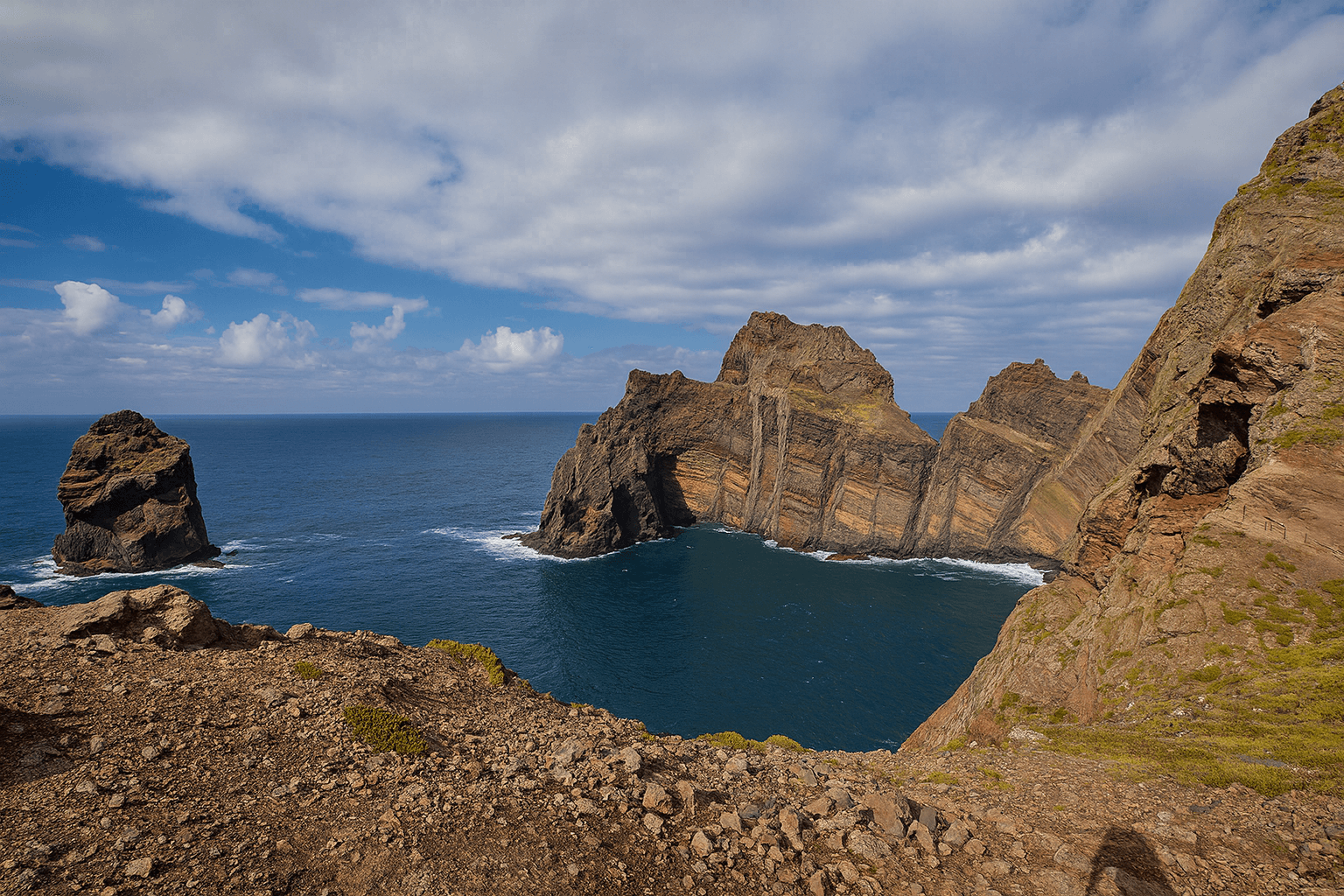
Madeira rises straight out of the deep Atlantic, and its underwater terrain is exactly what you would expect from a volcanic island: basalt boulder slopes, walls that keep going past recreational limits, swim-throughs carved through old lava, and sand plains where garden eels sway by the hundreds. The diving is concentrated on the sheltered south coast, in the lee of the island's 1,800-meter mountain spine, which blocks the dominant northwest Atlantic groundswell and keeps conditions diveable nearly every day of the year. Add Portugal's oldest marine reserve at Garajau – protected since 1986 and famous for dusky groupers that swim up to your mask – plus two purpose-sunk wrecks and a genuine deep dredger with a dark history, and you have one of Europe's most underrated dive destinations.
Best time to dive: Year-round. Water temperatures bottom out around 18°C (64°F) in late winter and peak near 24°C (75°F) in early autumn, with visibility commonly in the 20-30 m (65-100 ft) range. September and October offer the best combination of warm water, settled seas, and clarity. A 5mm wetsuit works most of the year; add a hood or step up to 7mm from December through March.
Pro tip: Check conditions on DiveLine's Madeira page for real-time visibility, swell, and wind forecasts before planning your trip. The south coast is sheltered from most weather, but a southerly blow is the one thing that cancels boats here – worth knowing before you book.
1. Garajau Nature Reserve
- Difficulty: Intermediate
- Type: Boat dive
- Depth: 18-40 m (60-130 ft)
- Visibility: Typically 15-30 m (50-100 ft)
Garajau is the flagship dive of Madeira, set inside Portugal's oldest marine reserve directly below the Cristo Rei statue at Ponta do Garajau, a short boat run east of Funchal. Protected since 1986, this stretch of coast has had four decades for its fish to grow large and lose their fear of divers – and nowhere is that more obvious than with the resident dusky groupers (Epinephelus marginatus). These are serious animals, and they will approach within touching distance, hold eye contact, and shadow your group along the reef. It is the closest thing Europe has to the habituated grouper encounters of tropical marine parks.
The terrain matches the billing: a slope of massive basalt boulders, ledges, and overhangs steps down from about 15 m before rolling into a wall that drops past 40 m (130 ft). Brown morays hole up in the crevices, barracuda and seabream school in the blue, stingrays and eagle rays cruise the margins, and garden eels colonize the sand channels between the rock. This is a no-take reserve, so respect the rules – no touching, feeding, or collecting – and watch your depth and gas: the wall keeps going well beyond where your no-decompression limit wants you to be.
2. Corveta Afonso Cerqueira (F488)
- Difficulty: Intermediate
- Type: Boat dive (wreck)
- Depth: 21-33 m (70-110 ft)
- Visibility: Typically 20-24 m (65-80 ft)
The Corveta Afonso Cerqueira is Madeira's marquee wreck: an 85-meter former Portuguese Navy corvette of the Baptista de Andrade class, scuttled below the towering Cabo Girão sea cliffs in September 2018 and declared a protected park the moment she hit the bottom. She sits upright and largely intact on flat sand, with the superstructure topping out around 18 m (60 ft) and the keel resting near 33 m (110 ft) – a nearly ideal profile that lets you work the whole ship on a single-tank dive. Boats reach her in about 30 minutes from Funchal marina.
Because she was prepared for divers before sinking, the corvette offers proper guided penetration: cut access points lead into the engine room, the bridge, and interior compartments, all with a guide and a light for those with the training. The wreck's pedigree as a photography subject is established – it hosted the 2022 European Underwater Photography Championship – and the marine life is catching up fast, with large dusky groupers patrolling the hull, schools of jacks and barracuda overhead, and big stingrays parked on the surrounding sand. Watch your no-decompression limits on the seabed; nitrox earns its keep here.
3. T-Reef (Garajau Reserve)
- Difficulty: Intermediate
- Type: Boat dive
- Depth: 17-30 m (55-100 ft)
- Visibility: Typically 17-30 m (55-100 ft)
T-Reef – known locally as Mamas, and sometimes the Amphitheatre – is the Garajau reserve's other headline boat dive, just offshore of Caniço de Baixo and only 5-10 minutes by RIB from either the Reis Magos slipway or Funchal. Two volcanic pinnacles rise from a broad sand plain at 24-30 m to crest around 12 m, standing almost entirely alone in open sand. That isolation is the whole point: with no other structure for hundreds of meters, everything in the neighborhood concentrates on the rock.
The result is the densest fish action in the reserve. Schooling barracuda, greater amberjack, and Guinean mackerel sweep over the peaks, the celebrated resident groupers work the ledges, and the rock itself is cut with cracks, overhangs, and a small cave sheltering morays, octopus, and giant anemones. Dives typically circle both pinnacles and cross the sand between them, where stingrays and round rays rest on the bottom. Moderate current can run over the reef, so be ready to drift off and surface for boat pickup as briefed – a small price for a site that fishes this well.
4. Arena (Garajau Reserve)
- Difficulty: Beginner
- Type: Shore dive (rocky entry) or short boat hop
- Depth: 15-24 m (50-80 ft)
- Visibility: Typically 20-30 m (65-100 ft)
Arena is one of the seven traditional dive sites of the Garajau Partial Nature Reserve and the most architecturally interesting of them. The site centers on a volcanic reef and pinnacle rising from the sand, but its signature is a roughly 10-meter swim-through: a horizontal tunnel that connects into a vertical shaft, roofed at about 7 m and bottoming near 16 m, flooded with light from above. The tunnel exits into a bowl-shaped amphitheater formation – the arena that gives the site its name – flanked by rock cascades that make natural grandstands for watching the fish.
Dived as a house reef from the Galomar and Reis Magos lidos – either a very short boat hop or a shore entry with a surface swim – Arena packs classic reserve life into an easy profile: tame dusky groupers, schooling bream and chromis, trumpetfish hanging in the column, a landmark gold sponge on the approach, and hundreds of garden eels standing up from the surrounding flats. The swim-through is short and bright rather than a true cave, but it still demands basic overhead awareness and clean buoyancy. For a beginner's second or third ocean dive, it is hard to imagine better.
5. Reis Magos
- Difficulty: Beginner
- Type: Shore dive (stair entry)
- Depth: 11-15 m (35-50 ft)
- Visibility: Typically 15-30 m (50-100 ft)
Reis Magos is the classic shore dive of the Garajau area – concrete steps straight off the promenade at Caniço de Baixo, on the eastern edge of the reserve, into a quiet cove where a rock wall runs from about 6 m down to sand near 16 m. The dive centers on the promenade run it as their house reef, so logistics could not be simpler: kit up at the shop, walk a short distance, descend along the wall, come back the same way. There is a beach restaurant, showers, and seasonal lifeguard cover right there.
What Reis Magos lacks in drama it repays in critters. This is the macro dive of Madeira: seahorses, nudibranchs, cleaner shrimp, cuttlefish, octopus, blennies, and morays work the ledges and boulder piles, while flounder and rays patrol the sand beyond the wall. It is also the go-to night dive on the island, when foraging octopus and spider crabs take over the reef. The one caveat is southerly weather – any swell or wind from the south puts surge on the steps and the shallow cobbles, so time your exit between sets and check the forecast before a night dive.
6. Bowbelle / Bom Rei Wreck
- Difficulty: Advanced
- Type: Boat dive (wreck)
- Depth: 30-38 m (100-125 ft)
- Visibility: Typically 20-30 m (65-100 ft)
The Bowbelle – renamed Bom Rei for her Madeira service – is the island's deepest named wreck and its most storied. This 90-meter Thames sand dredger is infamous in Britain for the 1989 Marchioness disaster on the river; she ended her days as an aggregate carrier off Madeira, caught fully laden in heavy weather off Ponta do Sol in 1996, breaking in two as she sank. She now lies on a sand slope off the southwest coast with the deck machinery reaching up to about 30 m (100 ft) and the hull settling near 38 m (125 ft).
Three decades on the bottom have turned the dredger into a rich artificial reef: black coral colonizes the deeper, shaded steelwork, the on-deck excavator shelters an unusual density of morays, and resident dusky and island groupers hold station over the hull while shoals of salema and grey mullet swarm the structure. Operators require advanced or deep certification, and the dive runs on a shotline – there is nothing to see on the open sand during the descent, and no reason to be off the structure in current. Plan your gas and deco conservatively; the depth is honest, and this is the dive on the island where discipline matters most.
7. Madeirense Wreck (Porto Santo)
- Difficulty: Intermediate
- Type: Boat dive (wreck)
- Depth: 30-34 m (100-110 ft)
- Visibility: Typically 24 m (80 ft), up to 40 m (130 ft)
The Madeirense is worth an island-hop in her own right. Scuttled off Porto Santo in October 2000 as the first ship in Portugal intentionally sunk as an artificial reef, this 70-meter former banana cargo and passenger vessel once ran the Funchal-Porto Santo supply line – so she was sunk, fittingly, within sight of her old route. She sits upright on sand at about 34 m, superstructure rising into the low 20s, just a few minutes by boat from the Vila Baleira marina. The hull has worked open over two and a half decades, and the open holds, deck, and bridge offer easy, well-lit penetration.
Two things set the Madeirense apart. First, the visibility: Porto Santo's water routinely beats the main island, and 40 m (130 ft) days happen. Second, the life: three species of grouper hold station on the wreck, stingrays and garden eels occupy the surrounding sand, and the occasional angel shark turns up on the flats – with every steel surface carpeted in sponges, hydroids, and bryozoans. Porto Santo is reached by a roughly 2.5-hour ferry from Funchal or a short flight; stay a night, dive the wreck twice, and you will likely have it to your own boat's group.
Planning Your Madeira Dives
Base yourself in Funchal or Caniço de Baixo and everything on this list except the Madeirense is within a 30-minute boat ride. The Garajau reserve is permit-controlled, so all reserve dives run through the authorised dive centers in Caniço and Funchal – which in practice just means booking ahead in summer. The south coast's shelter from the northwest Atlantic groundswell is what makes Madeira a year-round destination; the only weather that reliably cancels boats is a southerly swell or sustained southerly wind, which is exactly what DiveLine's forecasts are built to flag.
- Garajau reserve: No-take rules apply – dive with authorised operators, and never touch or feed the groupers, however close they come
- Wreck depths: The Afonso Cerqueira, Bowbelle, and Madeirense all spend real time below 30 m – nitrox is worth it, and the Bowbelle requires advanced certification
- Porto Santo: Ferry from Funchal (~2.5 hours) or a short flight; plan an overnight for the Madeirense rather than a rushed day trip
- Thermal protection: 5mm wetsuit year-round; add a hood or 7mm from December through March when water drops to 18°C (64°F)
- Conditions: South coast sites are sheltered from northerly weather – watch the southerly swell and wind forecast instead
Madeira compresses an unusual amount of variety into one leeward coastline: a marine reserve with forty years of protection behind its fish, two of the best prepared wrecks in the Atlantic, a deep dredger for the experienced, and shore diving easy enough to do before breakfast. You can log a grouper encounter at Garajau in the morning, the corvette below Cabo Girão in the afternoon, and a night dive off the Reis Magos steps the same evening – then take the ferry to Porto Santo and do it all again in even clearer water.
Ready to dive? Check current conditions for all Madeira sites on DiveLine's Madeira page.