Best Dive Sites in the Azores, Portugal: A Diver's Guide
Mid-Atlantic seamounts, mobula ray carousels, and blue sharks in open water – Europe's definitive big-animal diving destination
DiveLine Team
2026-07-06
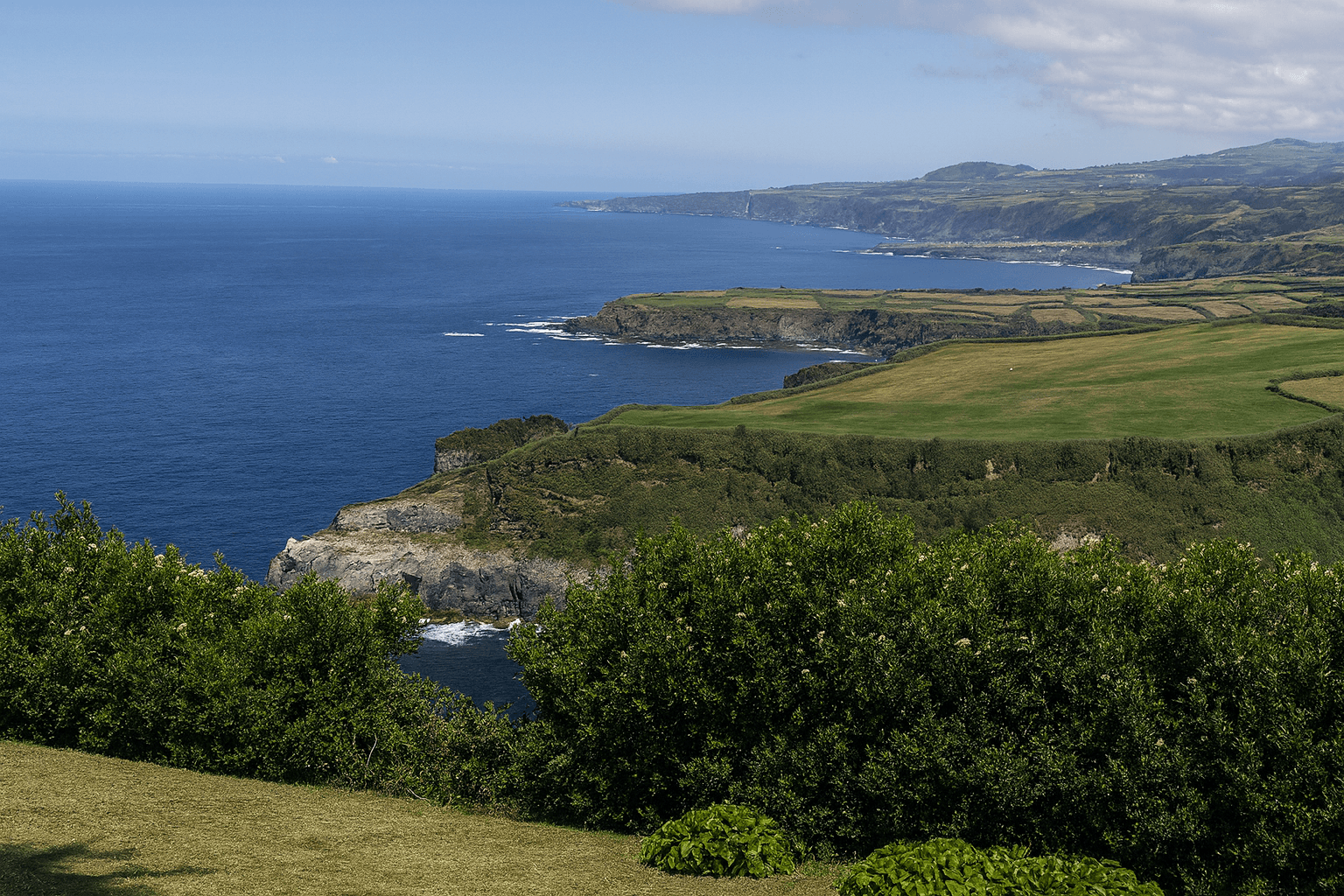
The Best Dive Sites in the Azores
The Azores sit alone in the middle of the North Atlantic, nine volcanic islands scattered across 600 kilometers of open ocean, roughly 1,500 kilometers west of mainland Portugal. There is no continental shelf here. The seafloor plunges to abyssal depths within sight of shore, and the seamounts that punctuate it act as oases – isolated volcanic pinnacles that concentrate pelagic life from thousands of square kilometers of empty blue water. The result is diving that has more in common with the Galápagos or Cocos than with anywhere else in Europe.
This is a big-animal destination first and foremost: spinning carousels of mobula rays, baited blue shark encounters in bottomless water, smooth hammerheads patrolling offshore reserves, and an active submarine volcano streaming curtains of gas from its crater. Most of the marquee sites are exposed, current-swept, and hours from shelter, which makes the Azores best suited to experienced divers who are comfortable in blue water. But the archipelago also holds a handful of sheltered, genuinely accessible dives – including one of the best beginner wrecks in the Atlantic – so a mixed-experience group can build a serious itinerary here.
Best time to dive: June through October, when the Atlantic settles enough for offshore trips to run reliably. The famous mobula ray aggregations peak from July to October, and blue shark trips run through the same summer window. Water temperatures range from 17°C in early summer to 24°C (63-75°F) at the peak – a 7mm wetsuit with hood is the standard kit year-round.
Pro tip: Offshore trips here live and die by the weather window. Check conditions on DiveLine's Azores page for real-time swell, wind, and visibility forecasts before committing to a long seamount crossing.
1. Princess Alice Bank
- Difficulty: Advanced
- Type: Boat dive (offshore seamount)
- Depth: 35-59 m (115-195 ft)
- Visibility: Typically 30 m (100 ft), up to 40 m
Princess Alice Bank is the dive the Azores is known for, and one of the great pelagic dives of the Atlantic. The seamount rises from over 1,500 m of open ocean to a pinnacle at roughly 29-35 m, some 45-50 nautical miles southwest of Faial and Pico. Getting there means a boat transit of several hours across genuinely open ocean – whales, dolphins, and turtles are regular sightings on the crossing – and the payoff is a summit swept by clear blue water and dense schools of fish that have nowhere else to gather.
The headline act is the summer aggregation of sicklefin devil rays (Mobula tarapacana): schools typically 20-40 strong that form slow, spinning carousels in the blue directly over the bank. Giant mantas, Galapagos sharks, amberjack, Almaco jacks, and large groupers round out the cast, with whale sharks and blue sharks recorded in season. Treat this as an expedition dive: the bank is fully exposed to Atlantic groundswell, persistent strong currents sweep the pinnacle, and the depth means your working dive happens at 35 m and beyond. Book with an experienced crew, expect trips to cancel when conditions are marginal, and be glad when they do.
2. Baixa do Ambrósio
- Difficulty: Intermediate
- Type: Boat dive (marine reserve)
- Depth: 11-46 m (35-150 ft); ray encounters at 5-15 m
- Visibility: Typically 25 m (80 ft), up to 30 m
Baixa do Ambrósio is Santa Maria's signature site and the smart alternative for divers who want the mobula experience without a 50-mile crossing. This shallow volcanic reef sits only about 3 nautical miles off the island's north coast, protected as a marine nature reserve, yet it draws the kind of big-animal action normally reserved for remote offshore banks. From late June to mid-October, devil rays gather here in numbers – typically 12-17 individuals circling the reef, with 40-50 at once on the best days.
The dive itself is disarmingly simple: you hang on the anchor line at 5-15 m and let the rays come to you, gliding in slow loops overhead while Almaco jacks, greater amberjack, yellowmouth barracuda, and thick clouds of anchovies shoal around the line. Ocean sunfish drift through, and the reef platform below drops to around 46 m for those who want structure. Because the encounter depth is shallow and the logistics are short-range, Ambrósio is the most accessible of the Azores' pelagic dives – but it sits in open Atlantic water with notorious currents, so intermediate skills and good blue-water buoyancy are still the entry requirement.
3. Banco Condor
- Difficulty: Advanced
- Type: Boat dive (baited blue-water)
- Depth: 5-15 m (15-50 ft) in the water column
- Visibility: Typically 20 m (65 ft), up to 30 m
Banco Condor is the headline shark dive of the central Azores – a protected seamount about 10 nautical miles WSW of Faial, and far more reachable than Princess Alice. This is not a bottom dive: the summit lies near 180 m, well below diving range. Instead, operators chum the surface layer and divers hold position at 5-15 m in open water while blue sharks rise from the deep to investigate. On a good summer day several individuals circle at arm's length, all lazy confidence and huge black eyes, with shortfin makos possible in season.
Hanging motionless in the top 15 meters of a 2,000-meter water column is a unique psychological exercise, and it demands exactly the skills the site is graded for: rock-solid buoyancy without visual references, calm breathing around apex predators, and disciplined positioning relative to the bait and the group. The bank concentrates plenty of other traffic too – schooling mobulas, tuna, and barracuda pass over it, and smooth hammerheads and even whale sharks have been recorded. Trips are strictly weather-dependent and only run in settled summer conditions, so build flexibility into your Faial itinerary.
4. Formigas & Dollabarat Reef
- Difficulty: Advanced
- Type: Boat dive (offshore marine reserve)
- Depth: 20-59 m (65-195 ft)
- Visibility: Typically 25 m (80 ft), up to 40 m
The Formigas & Dollabarat Reef complex is widely regarded as one of the most thrilling dives in the Atlantic. Roughly 20 nautical miles northeast of Santa Maria, this strictly protected marine reserve pairs the exposed Formigas islets with the fully submerged Dollabarat Reef about 5 km to their southwest. Volcanic drop-offs fall from a crown at just 5 m into deep blue water at 50-70 m, and the walls act as a magnet for everything hunting in the surrounding ocean.
The species list reads like a pelagic wish list: smooth hammerheads and Galapagos sharks, devil rays, giant mantas from mid-July through October, schooling barracuda, wahoo, big-eye and skipjack tuna, and giant trevally, over a reef structure held down by large dusky groupers and grey triggerfish. The wreck of the Olympia lies nearby at roughly 30-50 m for variety. The caveats are real, though – a long open-ocean crossing, strong and variable currents wrapping the pinnacles, and zero shelter if the weather turns. This is a dive you plan a Santa Maria or São Miguel trip around, then wait for the ocean to permit.
5. Banco Dom João de Castro
- Difficulty: Advanced
- Type: Boat dive (submarine volcano)
- Depth: 18-50 m (60-165 ft); summit at 13 m
- Visibility: Typically 25 m (80 ft), up to 40 m
Banco Dom João de Castro is the strangest dive in this guide: an active submarine volcano on the Terceira Rift, midway between São Miguel and Terceira, that last erupted in 1720. Its summit reaches to just 13 m below the surface, the crater – about 450 m across – drops from 12 to 25 m, and four outer peaks stand at 40-50 m. The draw is the live hydrothermal field inside it: fumaroles and curtains of warm gas bubbles streaming up through the volcanic seabed, so you fly over a landscape that is visibly, audibly geologically alive.
The biology keeps pace with the geology. Dense schools of barracuda and amberjack stack over the summit, dusky groupers and ornate wrasse hold the rock, and rays, mobulas, turtles, and the occasional shark patrol the structure. At roughly 37 nautical miles from the nearest port with 360-degree exposure to the open Atlantic, the bank is only diveable in genuinely calm, settled conditions – which is why it remains one of the least-dived marquee sites in the archipelago. If a charter offers you a weather window, take it; few divers ever log a working volcano.
6. Dori (Liberty Ship Wreck)
- Difficulty: Beginner
- Type: Boat dive (wreck, underwater archaeological park)
- Depth: 15-20 m (50-65 ft); stern at 9 m
- Visibility: Typically 20 m (65 ft), up to 30 m
The Dori is the Azores' most famous shipwreck and the essential São Miguel dive. A WWII Liberty ship that served the Normandy landings during Operation Overlord, she sank about 800 m off Ponta Delgada on 16 January 1964 and now rests upright on clean sand just outside the harbour – bow down at around 20 m, stern rising to only 9 m. The whole wreck is legible in a single dive, and her shallow, sheltered position keeps the site calm and current-free when the offshore banks are blown out.
Protected as an underwater archaeological park where fishing is banned, the Dori is thick with life: her boilers and stern are regularly wrapped in dense shoals of Moroccan white seabream, with wrasse, damselfish, and groupers over the structure, octopus and morays in the recesses, and rays crossing the surrounding sand. Passing barracuda, jacks, and amberjack drift over the hull. Many consider her the best dive on the island regardless of experience level – she works equally well as a first-ever wreck dive, a photography dive, or the relaxed second tank after a morning offshore.
7. Cemitério das Âncoras (Anchor Graveyard)
- Difficulty: Intermediate
- Type: Boat dive (archaeological park)
- Depth: 18-35 m (60-115 ft)
- Visibility: Typically 20 m (65 ft), up to 30 m
Cemitério das Âncoras – the Cemetery of Anchors – is one of the most distinctive dives in the Atlantic, and Terceira's must-do site. From the 15th century onward, the Bay of Angra do Heroísmo was a mandatory stop on the Europe-Americas-India sailing routes, and centuries of winter storms cost anchored ships their ground tackle. The result is a trail of more than 40 historic anchors strewn across the seabed, protected today as the Parque Arqueológico Subaquático da Baía de Angra.
The dive is a three-minute boat ride from the harbour: two yellow buoys mark a trail that starts at a large anchor at about 16 m, then follows a slope and vertical wall down to an enormous inverted anchor and sand-set artefacts near 32-35 m. Centuries of encrusting growth have turned the ironwork into artificial reef – dusky groupers, Mediterranean morays, Moroccan white seabream, salema, and common stingrays work the trail, with octopus in the rocky sections. The bay is naturally sheltered from the dominant westerly swell, making this a reliable dive when conditions rule out everything offshore, and a rare chance to dive four hundred years of maritime history in one tank.
Planning Your Azores Dives
The Azores are a multi-island destination, and which sites you can reach depends on where you base yourself. São Miguel (fly into Ponta Delgada, the main international gateway) gives you the Dori and long-range trips toward Formigas. Santa Maria is the base for Baixa do Ambrósio and the closest jump-off for Formigas & Dollabarat. Faial and Pico serve Banco Condor and the expedition runs to Princess Alice Bank, while Terceira covers the Anchor Graveyard and occasional trips to Dom João de Castro. Inter-island flights and seasonal ferries make a two-island itinerary realistic within a week – a common pattern is São Miguel or Santa Maria plus Faial/Pico.
- Season: June-October for offshore trips; mobula aggregations peak July-October
- Exposure: 7mm wetsuit with hood year-round; water runs 17-24°C
- Offshore trips: Princess Alice, Formigas, and Dom João de Castro cancel frequently for weather – build spare days into your schedule
- Skills: Blue-water buoyancy and SMB deployment are prerequisites for the seamount and shark dives
- Bad-weather options: The Dori and the Anchor Graveyard stay diveable when the open Atlantic does not
- Booking: Reserve seamount and shark trips well in advance – boats are small and summer demand is high
Few destinations reward planning like the Azores. The marquee dives are hostage to the open Atlantic, and the divers who come home with mobula carousels and blue shark encounters on their logs are the ones who gave the weather room to cooperate. Come in the summer window, base yourself near the sites you care about most, keep your schedule loose, and let the sheltered wrecks and archaeological parks fill the days the ocean takes back.
Ready to dive? Check current conditions for all Azores sites on DiveLine's Azores page.